
 English
 Русский
 Español
 Français
 Deutsch
 简体中文
简体中文
 Árabe
Árabe
 Português
 日本語
日本語
 한국어
한국어
 हिंदी
हिंदी
 Prancis
 Türkçe
 Tiếng Việt
 Italiano
 ไทย
ไทย

How Alumina Kiln Furniture Performs in High-Temperature Firing
High-temperature firing places a heavy load on kiln furniture. Shelves must support ceramic products during heating and cooling. They also face repeated thermal cycles, heavy loads, and direct heat.
Poor kiln furniture can lead to shelf cracking, warping, or unstable loading. These problems can affect product quality and increase maintenance work.
Alumina kiln furniture is used in many ceramic firing applications because alumina-based materials can provide good heat resistance and mechanical strength. The right shelf design can also help improve loading stability during repeated firing.
Why Kiln Furniture Matters in High-Temperature Firing
Kiln furniture supports products inside the kiln. It includes shelves, posts, setters, saggers, and other parts.
During firing, kiln furniture is exposed to high temperatures. It must also carry the weight of ceramic products. At the end of the firing cycle, the furniture cools down again.
This repeated heating and cooling can place stress on the material. A shelf that is not suitable for the application may develop cracks or deformation over time.
Shelf thickness and size also matter. A large shelf may need more support than a small shelf. Heavy products need stable support during firing.
The loading method is another important factor. Uneven loading can create extra stress on the shelf. Proper stacking helps distribute the load more evenly.
How Alumina Kiln Furniture Handles High Heat
Alumina is widely used in high-temperature ceramic applications. It has good resistance to heat and can maintain its shape under suitable firing conditions.
Alumina kiln furniture can be made into different shapes and sizes. Shelves are commonly used to support ceramic parts during firing. Posts can be placed under the shelves to create stable layers.
The material must match the actual kiln temperature and firing cycle. Maximum temperature alone is not enough. Heating rate, cooling rate, load weight, shelf size, and firing frequency can also affect service performance.
For example, a shelf used for repeated firing may face more thermal stress than one used only occasionally. A shelf with poor support may also deform faster under a heavy load.
This is why kiln furniture should be considered as part of the complete firing process.
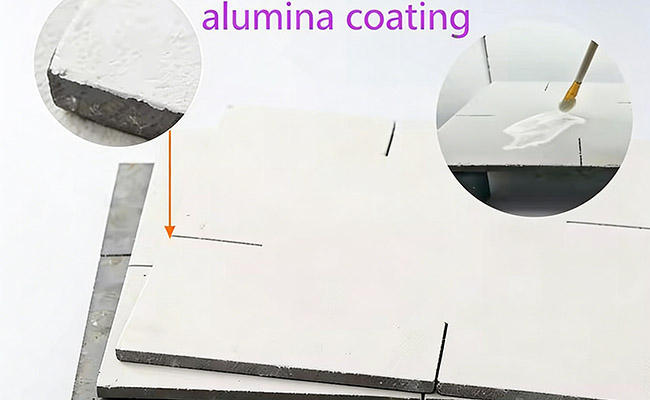
Why High Alumina Kiln Shelves Can Reduce Firing Problems
High alumina kiln shelves are often used when the firing temperature and load require stronger ceramic support.
A suitable shelf can help keep products stable during firing. It can also reduce problems caused by shelf deformation or uneven support.
However, high alumina content alone does not solve every problem. Shelf design is also important. The size, thickness, shape, and support method should match the application.
Thermal shock is another concern. Fast temperature changes can create stress inside ceramic kiln furniture. Repeated thermal stress may lead to cracking if the operating conditions are too severe.
Operators should also check shelves regularly. Small cracks can become larger during later firing cycles. Damaged shelves should not continue to carry heavy loads.
The following table shows several common problems and their possible causes:
Common Problem | Possible Cause |
Shelf cracking | Thermal shock, impact, or repeated thermal stress |
Shelf warping | Heavy load, poor support, or unsuitable shelf design |
Unstable products | Uneven loading or incorrect stacking |
Edge damage | Handling impact or improper placement |
Shorter service life | High thermal stress or unsuitable operating conditions |
These problems are not always caused by the shelf material alone. Kiln operation and handling also have a strong effect.
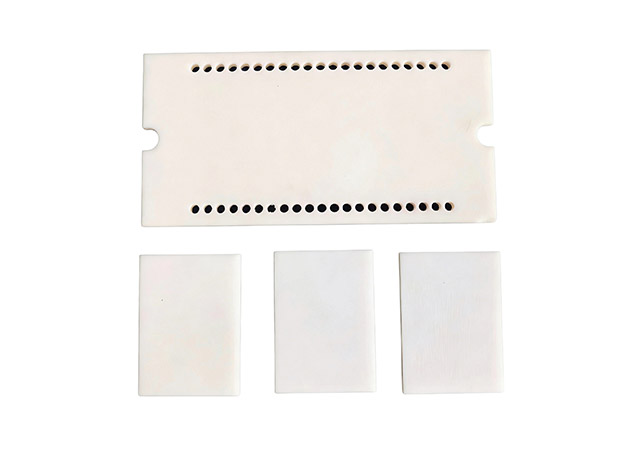
How Alumina Kiln Shelves Support Ceramic Production
Alumina kiln shelves are commonly used to create stable layers inside ceramic kilns. They allow operators to load products in an organized way.
Stable shelves are important when products have different shapes and sizes. Good shelf support can help reduce movement during firing.
Shelf weight is also important for daily operation. Operators need to handle, stack, clean, and replace kiln furniture. The design should therefore balance strength and practical handling.
For some applications, shelves may need special dimensions or shapes. Custom alumina kiln furniture can be made for specific kiln sizes and product loading requirements.
Material selection should also consider the firing atmosphere. Some ceramic processes may expose kiln furniture to dust, vapors, or reactive materials. These conditions can affect the furniture over repeated cycles.
Common Problems with Kiln Shelves During Firing
Kiln shelves do not always fail because the operating temperature is too high. Many problems start with small changes in daily operation.
Uneven loading is one common issue. If most of the weight is placed on one area, the shelf may experience uneven stress.
Poor stacking can also create local pressure. Products should be placed in a stable position with suitable support.
Handling is another factor. Dropping a shelf or hitting its edge can create small damage. The shelf may then crack during a later firing cycle.
Cleaning should also be done carefully. Operators should remove unwanted material without causing mechanical damage to the shelf surface.
Regular inspection can help identify problems early. Operators can check for cracks, edge damage, warping, and surface changes before each firing cycle.
How Proper Kiln Furniture Helps Improve Production
Good kiln furniture supports more stable loading and repeated firing. It also helps operators manage products more efficiently inside the kiln.
The material, shelf size, thickness, support spacing, and loading method should work together. No single factor determines kiln furniture performance.
For high-temperature ceramic production, alumina kiln furniture can provide a practical option for demanding firing conditions. High alumina kiln shelves can support heavy ceramic loads when their design and operating conditions are properly matched.
For buyers, the focus should not only be on the initial shelf price. Shelf dimensions, material quality, firing conditions, handling, and replacement frequency all affect the long-term cost.
A suitable kiln furniture design can help reduce avoidable shelf damage and make daily kiln operation more stable.
Online Message
RELATED PRODUCTS

LAR’s Kiln Furniture perforated Extruded Batts are high-temperature refractory support components used in ceramic firing systems. These kiln Batts support and separate ceramic products during firing. The design improves airflow and heat distribution inside the kiln. Manufacturers produce these batts by extrusion forming technology. The structure contains evenly distributed perforations. This design reduces weight and improves thermal efficiency. The material often uses mullite or similar refractory compositions. The product maintains stable performance under repeated firing cycles. Many industries use Kiln LAR’s Furniture perforated Extruded Batts in ceramic production. These industries include tableware, sanitary ware, electronic ceramics, and technical ceramics. A reliable Kiln Furniture perforated Extruded Batts supplier can provide stable quality and consistent dimensions.
LAR’s Kiln Furniture Base plates are essential refractory support components used in high-temperature kiln systems. These Kiln base plates provide a stable platform for stacking kiln furniture and ceramic products during firing. Manufacturers produce Kiln Furniture Base plates from high-quality refractory materials such as mullite or similar compositions. The production process includes high-temperature sintering to ensure structural stability. Each plate maintains consistent performance under repeated heating cycles. LAR’s Kiln Furniture Base plates suppliers design these products to improve kiln efficiency. The structure helps distribute loads evenly and supports uniform heat transfer. Many industries rely on these base plates to maintain stable firing conditions.
LAR’s Cordierite mullite kiln furniture is a widely used refractory support material in ceramic firing systems. This type of kiln furniture combines the advantages of mullite kiln furniture and cordierite kiln furniture. The material provides a balanced performance between thermal shock resistance and mechanical strength. Manufacturers produce this product by blending cordierite and mullite raw materials. The production process includes high-temperature sintering to form a stable crystal structure. The final product shows reliable performance under repeated firing cycles. Many mullite kiln furniture manufacturers supply this material for energy-efficient kilns. The structure helps reduce thermal stress and improves firing stability. Industries choose this material when they require both durability and resistance to rapid temperature changes.
LAR’s Ceramic kiln furniture refers to refractory components used to support, separate, and protect ceramic products during high-temperature firing. These products play a key role in maintaining stability inside the kiln. A professional ceramic kiln furniture manufacturer produces these components using materials such as mullite, cordierite, or silicon carbide. The manufacturing process includes shaping, drying, and high-temperature sintering. Each step ensures consistent structure and reliable performance. LAR’s Ceramic kiln furniture suppliers design different products to meet various kiln conditions. These components help improve heat distribution and support efficient firing cycles. Many industries rely on ceramic kiln furniture to maintain product quality and reduce production defects.
LAR’s Kiln furniture kit is a complete set of refractory components used inside a kiln to support ceramic products during firing. A typical kiln furniture kit includes shelves, posts, setters, and other supporting parts. Manufacturers design each kiln furniture kit to match specific kiln sizes and firing requirements. A custom Kiln Furniture kit allows users to optimize space and improve loading efficiency. The system helps maintain stable stacking and consistent heat distribution. Many users choose small kiln furniture kits for laboratory kilns or compact production kilns. These kits provide flexible configurations while maintaining reliable performance. The structure supports repeated firing cycles without significant deformation.
LAR’s Kiln Furniture prop Accessories are auxiliary refractory components used in kiln systems. These accessories support and stabilize kiln furniture during firing. Manufacturers produce kiln prop accessories using materials such as cordierite, mullite, or high alumina. The production process includes shaping and high-temperature sintering. Each component maintains stable performance under repeated firing conditions. LAR’s Kiln prop accessories help improve stacking flexibility and loading efficiency. Many suppliers offer kiln prop accessories for sale in standard and customized forms. These components work together with shelves and posts to create a stable kiln structure.
LAR’s Kiln Furniture extruded Props are structural refractory supports used in kiln furniture systems. These props are manufactured through extrusion forming technology, which ensures consistent shape and uniform density. Manufacturers produce extruded kiln props using materials such as cordierite, mullite, or high alumina. The extrusion process allows continuous shaping, which improves dimensional accuracy and production efficiency. LAR’s Kiln Furniture extruded Props provide stable support for kiln shelves and products during firing. Many Kiln Furniture extruded Props suppliers offer standard sizes as well as customized solutions for different kiln designs.
LAR’s Kiln Furniture plain Props are basic refractory supports used in kiln stacking systems. These props provide stable vertical support between kiln shelves during firing. Manufacturers produce plain kiln props using materials such as cordierite, mullite, or high alumina. The production process includes pressing or extrusion followed by high-temperature sintering. Each product maintains stable performance under repeated thermal cycles. LAR’s Kiln Furniture plain Props are widely used because of their simple structure and reliable performance. Many suppliers offer Kiln Furniture plain Props for sale in standard sizes. Users can also request customized dimensions for specific kiln designs.
LAR’s Kiln Furniture Crucibles are refractory containers used for holding and processing materials at high temperatures. These crucibles are widely applied in ceramic and industrial kiln systems. Manufacturers produce kiln furniture ceramic crucible products using materials such as high alumina, mullite, or silicon carbide. These materials provide excellent thermal stability and chemical resistance. Each crucible maintains structural integrity during repeated firing cycles. LAR’s Kiln Furniture Crucibles support processes such as melting, sintering, and calcination. Many suppliers offer standard products as well as custom Kiln Furniture Crucibles for specific industrial applications.
