
 English
 Русский
 Español
 Français
 Deutsch
 简体中文
简体中文
 Árabe
Árabe
 Português
 日本語
日本語
 한국어
한국어
 हिंदी
हिंदी
 Prancis
 Türkçe
 Tiếng Việt
 Italiano
 ไทย
ไทย

How Proper Refractory Material Selection Can Extend Furnace Service Life
Furnace repairs can happen for many reasons.
Refractory damage often develops over time. High heat, fast temperature changes, wear, chemical attack, and heavy loads can all damage the lining.
When the same area needs repair many times, using the same material may not solve the problem.
A better way is to find the real cause of the damage first. Then, choose the right refractory material for each area.
Why Furnace Linings Fail Early
A furnace can work at the correct temperature and still have lining problems.
Temperature is not the only factor.
During operation, refractory materials may face:
Fast heating and cooling
Material impact
Abrasive particles
Chemical attack
Heavy loads
Uneven heating
Frequent start and stop
Different areas also have different needs.
A furnace wall may need good heat resistance and chemical stability.
A material transfer area may need better wear resistance.
Using one material for the whole furnace may cause early damage.
A Practical Case: One Area Needed Repeated Repairs
A manufacturer had a high-temperature furnace.
One area of the lining needed repairs several times.
The customer had replaced the damaged refractory twice. But the same area failed again after more use.
The technical team first checked the damaged area.
They found two main problems: material impact and repeated heating and cooling.
The nearby lining was still in good condition.
This showed that the problem was mainly in one area. The whole lining did not need to be replaced.
The repair plan was changed.
A more suitable wear-resistant material was used in the damaged area. The good parts of the old lining were kept.
The maintenance team later said:
“We had been replacing the damaged section without looking closely at why it kept failing. The wear pattern gave us a much clearer direction.”
This case shows a simple point:
Find the cause before choosing the material.
Refractory Bricks for Furnace Lining
Refractory bricks are widely used in industrial furnaces.
They can provide good heat resistance and strong support.
But not every furnace area needs the same type of brick.
A furnace wall may need good heat resistance and chemical resistance.
A furnace bottom may need higher strength and wear resistance.
An area that touches aggressive materials may need better corrosion resistance.
When choosing refractory bricks, check:
Operating temperature
Furnace atmosphere
Mechanical load
Chemical exposure
Temperature changes
Abrasion
Expected service life
A higher temperature rating does not always mean better performance.
The material should match the real working conditions.
Where Wear Resistant Ceramic Can Help
Abrasion can quickly damage a refractory lining.
This often happens where raw materials, ash, minerals, or other particles move continuously.
Common signs include:
Thin surfaces
Deep grooves
Local material loss
Exposed lining
In these areas, wear resistant ceramic can provide extra protection.
It is useful when wear is the main cause of damage.
There is also no need to use this material in every area.
In some cases, only the high-wear areas need extra protection.
This can reduce material use and help extend the life of these areas.
When SiC Products May Be a Good Choice
Some furnace areas face more than one problem.
They may have high heat, fast temperature changes, and mechanical stress.
SiC products can be considered for these conditions.
Silicon carbide has high hardness, good heat transfer, and good thermal shock resistance.
But the material still needs to match the application.
For example, an area with many heating and cooling cycles may need different material properties from an area with a stable temperature.
The full working cycle should be checked before choosing SiC products.
Insulation Also Affects Furnace Costs
A refractory lining does more than protect the furnace.
Good insulation can also help reduce heat loss.
Poor insulation can increase energy use. It can also make the outside of the furnace too hot.
For equipment with limited space, microporous insulation materials can provide high insulation performance in a thin layer.
Calcium silicate insulation boards and mullite insulation bricks can also be used in suitable high-temperature applications.
The whole insulation structure should be checked.
Thickness is not the only factor.
Joint design, compression, installation, and temperature changes can also affect insulation performance.
Honeycomb Ceramics for Heat Recovery
Honeycomb ceramics are used in some high-temperature heat recovery applications.
They work with hot gas and repeated temperature changes.
Common problems include:
Cracks
Higher pressure drop
Lower heat transfer
The ceramic is not always the main cause.
Dust can block the channels.
Uneven gas flow can also cause problems.
Fast temperature changes and poor installation may also lead to damage.
Before replacing a damaged ceramic honeycomb, check the gas flow first.
Find where the damage starts.
This can help avoid replacing the ceramic again and again.
Kiln Furniture Also Needs the Right Material
Ceramic factories have different refractory needs.
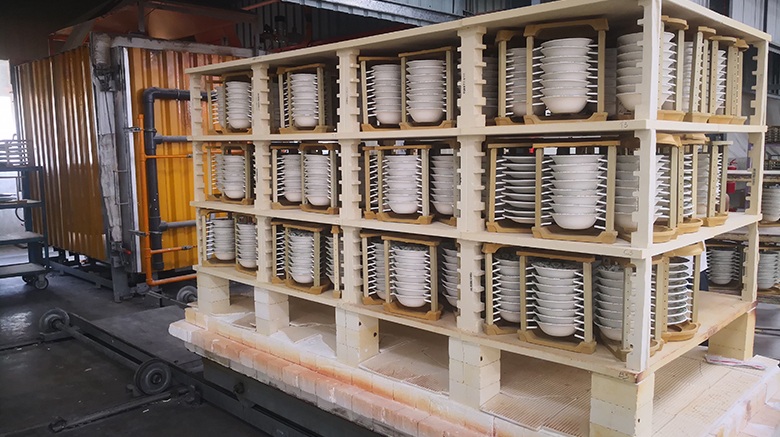
Kiln furniture, such as kiln shelves, posts, and beams, supports ceramic products during firing.
If the kiln furniture is not suitable for the product weight or firing temperature, it may crack or bend.
A common mistake is choosing kiln furniture only by its maximum temperature.
Other factors are also important:
Product weight
Support design
Firing cycle
Product size
Kiln atmosphere
Even small deformation can affect product quality.
It may also increase product waste.
A Simple Way to Improve Refractory Service Life
A simple method is to divide the furnace into different areas.
Then check the main problem in each area.
| Furnace Zone | Main Stress | Key Requirement |
|---|---|---|
| Furnace wall | Heat and chemicals | Heat and chemical resistance |
| Furnace bottom | Heavy load | Strength and wear resistance |
| Material impact area | Impact and wear | Wear resistance |
| High-cycle area | Fast temperature changes | Thermal shock resistance |
| Insulation layer | Heat loss | Low heat transfer |
| Heat recovery area | Hot gas and temperature changes | Heat stability and good gas flow |
This method can help avoid using the same material everywhere.
How to Reduce Maintenance Costs
The cheapest refractory material is not always the cheapest choice in the long run.
Furnace costs can include:
Material replacement
Installation work
Furnace downtime
Lost production
Emergency repairs
Energy loss
A more expensive material may be a better choice if it lasts longer.
For this reason, buyers should look at the total cost.
Do not look only at the purchase price.
What to Tell a Refractory Supplier
Before buying refractory materials, provide clear information about the furnace.
Useful information includes:
Operating temperature
Temperature changes
Furnace atmosphere
Process material
Wear conditions
Mechanical load
Installation size
Previous repair history
A professional refractory supplier can use this information to understand the application.
The goal is not simply to choose the highest-grade material.
The goal is to choose the right material for the job.
Final Thoughts
Longer furnace life does not always require a complete lining change.
First, find the real cause of the damage.
Then, choose materials based on the working conditions of each area.
Refractory bricks can protect the main furnace lining.
Wear resistant ceramic can help protect high-wear areas.
SiC products can be used in demanding high-temperature areas.
Microporous insulation materials, calcium silicate boards, and mullite insulation bricks can help reduce heat loss in suitable applications.
Honeycomb ceramics and kiln furniture also need the right material for their working conditions.
The basic process is simple:
Check the working conditions. Find the cause of the damage. Choose the right refractory material.
This approach can help reduce repeated repairs and improve furnace service life.
