
 English
 Русский
 Español
 Français
 Deutsch
 简体中文
简体中文
 Árabe
Árabe
 Português
 日本語
日本語
 한국어
한국어
 हिंदी
हिंदी
 Prancis
 Türkçe
 Tiếng Việt
 Italiano
 ไทย
ไทย

How to Choose the Right Silicon Carbide Plate for Industrial Applications
Silicon carbide is widely used in high-temperature and demanding industrial applications because it combines high hardness, thermal conductivity, low thermal expansion, wear resistance, and corrosion resistance. However, not every silicon carbide plate is suitable for every application. Material grade, manufacturing method, thickness, dimensions, operating temperature, and installation conditions can all affect performance.
Choosing the right silicon carbide plates requires more than comparing product prices. Engineers need to match the plate material with the actual working conditions.
Why Silicon Carbide Plates Are Used in High-Temperature Applications
Industrial equipment used in kilns, furnaces, heat treatment equipment, chemical processing, and abrasive material handling can operate under severe thermal and mechanical conditions. Conventional materials may experience deformation, oxidation, abrasion, or thermal stress when exposed to these conditions for long periods.
Silicon carbide has a low coefficient of thermal expansion and relatively high thermal conductivity. These characteristics help reduce thermal stress during temperature changes. Public technical data also shows that different SiC grades can have maximum use temperatures ranging from about 1000°C to 1600°C, depending on the manufacturing process and material grade.
This makes silicon carbide plates suitable for applications where both heat resistance and dimensional stability are important.
What Makes a Silicon Carbide Ceramic Plate Different
A silicon carbide ceramic plate is not simply a harder version of a conventional ceramic plate. Its performance comes from the properties of SiC and the way the material is manufactured.
For example, published data for reaction-bonded SiC reports a typical density of about 3.04 g/cm³, hardness around 2500 VHN, thermal conductivity around 145 W/m·K, and a thermal expansion coefficient of approximately 4.3 × 10⁻⁶/°C.
Other SiC grades show different values. CoorsTek data lists room-temperature thermal conductivity from 80 to 170 W/m·K across several grades, with maximum use temperatures listed from 1000°C to 1600°C.
Therefore, buyers should always check the technical data of the actual grade instead of relying only on the general term “silicon carbide.”
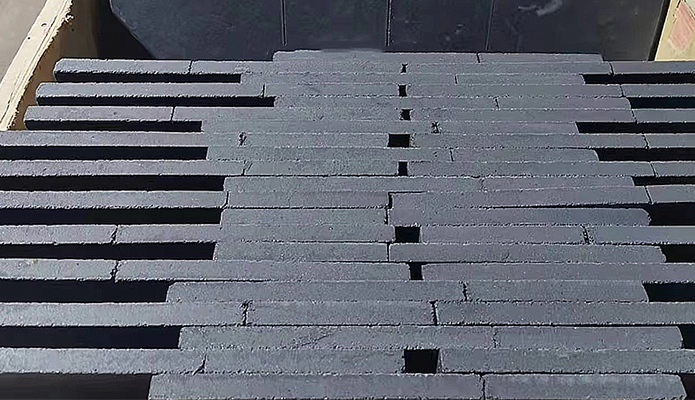
A Practical Example: When Conventional Plates Fail
Consider a high-temperature furnace component that uses a conventional refractory or metal plate. The component operates through repeated heating and cooling cycles.
After extended operation, the plate may show warping, surface wear, or cracking. The problem can become more serious when the component also experiences abrasive contact or rapid temperature changes.
Replacing the material with SiC may improve performance when the application requires high thermal stability and wear resistance. However, material replacement alone does not solve every failure.
The plate must still have the correct thickness, support arrangement, dimensions, and installation method. Thermal gradients and mechanical loading should also be considered.
How SiC Plate Material and Manufacturing Method Affect Performance
Manufacturing method is an important factor when selecting a silicon carbide ceramic plate.
Common SiC production routes include reaction bonding, direct sintering, liquid-phase sintering, and chemical vapor deposition. These processes can produce significantly different mechanical and thermal properties.
For example, CoorsTek reports flexural strength values of approximately 450–630 MPa for several SiC grades at 20°C. Thermal conductivity in the same material range varies from approximately 70 to 170 W/m·K.
This difference is important. A plate designed for kiln furniture may have different requirements from a thin SiC component used in a semiconductor process.
Choosing the Right Silicon Carbide Plate Size and Thickness
Size and thickness should be selected according to the mechanical load and thermal conditions.
A thin plate may reduce weight and material consumption, but it may not provide enough rigidity for a heavily loaded application. A thicker plate can provide greater structural support, but it also increases weight, material consumption, and machining requirements.
The installation area should also be measured accurately. Engineers should consider plate length, width, thickness, support points, holes, slots, edge shapes, and expansion allowance.
For large or irregular components, custom dimensions can help reduce unnecessary gaps and simplify installation.
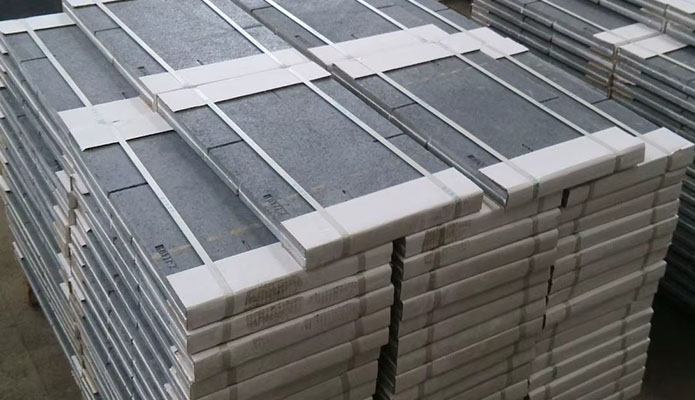
What Affects Silicon Carbide Plate Price
The silicon carbide plate price cannot be determined from material name alone. Several factors influence the final quotation.
| Price Factor | Typical Influence |
|---|---|
| SiC grade | Different grades have different material costs |
| Plate dimensions | Larger plates require more material |
| Thickness | Thicker plates increase material consumption |
| Manufacturing method | Processing route affects production cost |
| Machining | Holes, grooves, and special edges add processing |
| Quantity | Order volume can affect unit cost |
| Custom design | Special shapes require additional processing |
For this reason, a low initial price does not always represent the lowest overall cost. Service life, replacement frequency, machining requirements, and application performance should also be evaluated.
When to Choose Custom Silicon Carbide Plates
Custom silicon carbide plates are useful when standard sizes cannot meet the installation requirements.
Custom plates can be produced according to specified dimensions, thicknesses, holes, slots, curved profiles, and edge designs. This is particularly useful for furnace components, kiln furniture, heat-treatment equipment, and other applications with limited installation space.
A custom design can also help reduce unnecessary machining at the installation site.
Practical Tips for Selecting Silicon Carbide Plates
Before purchasing a silicon carbide ceramic plate, buyers should provide clear application information. The key points include operating temperature, thermal cycling conditions, mechanical load, abrasive exposure, required dimensions, thickness, and installation method.
It is also important to request technical data for the actual material grade. Published SiC data shows that properties can vary considerably between manufacturing methods and grades.
When comparing silicon carbide plate price, buyers should therefore compare material grade, specifications, machining, quantity, and expected service requirements together.
The right silicon carbide plates should be selected according to the complete operating environment, not price alone. Matching material grade, manufacturing method, dimensions, and application conditions can help improve component reliability and reduce unnecessary replacement costs.
Online Message
RELATED PRODUCTS

Silicon carbide wear resistant ceramics are advanced materials designed for extreme abrasion and high-temperature environments. These products are mainly made from silicon carbide (SiC). The silicon carbide wear plates provide excellent resistance to wear, corrosion, and thermal shock. LAR Silicon Carbide Wear Resistant Ceramic delivers strong protection in high-abrasion industrial systems. This product uses high-purity silicon carbide materials and advanced sintering technology. The structure gives the ceramic high hardness, low wear loss, and stable chemical performance. Many mining plants, power stations, cement factories, and bulk material handling systems use silicon carbide wear resistant ceramics to reduce equipment damage and extend service life. LAR designs these products for harsh operating environments with strong friction and particle impact. The material keeps stable performance under continuous wear conditions. Many customers choose silicon carbide wear plates because they provide better wear resistance than ordinary metal liners. The dense ceramic structure also helps reduce maintenance frequency and shutdown costs. LAR produces different shapes and customized sizes for various industrial equipment. Engineers can install sic ceramic linings inside chutes, cyclones, hoppers, pipelines, separators, and transfer systems. These ceramic parts protect equipment surfaces from rapid wear caused by sand, ore, ash, coal powder, and other abrasive materials.
LAR manufactures wear resistant ceramic plates for heavy abrasion industrial environments. A wear resistant ceramic plate from LAR uses high-purity ceramic materials to ensure strong mechanical stability. This wear resistant plate protects equipment surfaces from continuous friction, impact, and particle erosion. LAR produces each wear resistant ceramic plate through pressing and high-temperature sintering processes. This wear resistant plate forms a dense microstructure that improves surface strength and durability. A custom wear resistant plate supports precise adaptation to different equipment layouts and installation conditions. Many industries such as mining, cement, steel, and power generation rely on wear resistant ceramic plates. A wear resistant ceramic plate is commonly installed in chutes, hoppers, cyclones, and conveying systems. A custom wear resistant plate from LAR helps extend equipment lifespan and reduce maintenance frequency in harsh working environments.
LAR’s Kiln Furniture Base plates are essential refractory support components used in high-temperature kiln systems. These Kiln base plates provide a stable platform for stacking kiln furniture and ceramic products during firing. Manufacturers produce Kiln Furniture Base plates from high-quality refractory materials such as mullite or similar compositions. The production process includes high-temperature sintering to ensure structural stability. Each plate maintains consistent performance under repeated heating cycles. LAR’s Kiln Furniture Base plates suppliers design these products to improve kiln efficiency. The structure helps distribute loads evenly and supports uniform heat transfer. Many industries rely on these base plates to maintain stable firing conditions.
LAR’s Silicon carbide kiln shelves are high-performance refractory plates used in demanding kiln environments. These shelves are an important part of silicon carbide kiln furniture systems. Manufacturers produce silicon carbide kiln shelves using SiC-based materials through high-temperature sintering or reaction bonding processes. The material provides excellent thermal conductivity and high mechanical strength. These properties make the product suitable for fast firing and heavy load applications. Many industries choose sic kiln furniture when they require stable performance under extreme conditions. Silicon carbide kiln furniture improves heat transfer and supports efficient kiln operation.
LAR’s Alumina kiln shelves are high-performance refractory plates used in high-temperature ceramic firing. These shelves are an important part of alumina kiln furniture systems. Manufacturers produce high alumina kiln shelves using high-purity alumina materials. The production process includes precise forming and high-temperature sintering. This process creates a dense and stable structure that performs well under extreme kiln conditions. Many industries choose alumina kiln furniture when they require high strength and high temperature resistance. Alumina kiln shelves provide reliable support and maintain dimensional stability during repeated firing cycles.
LAR's silicon carbide plates are high-performance refractory and structural components used in high-temperature and wear-resistant applications. These plates provide excellent mechanical strength and thermal stability. Manufacturers produce silicon carbide ceramic plate products using advanced processes such as reaction bonding or sintering. The material offers high hardness, good thermal conductivity, and strong resistance to oxidation. Each silicon carbide plate maintains stable performance under harsh working conditions. LAR's silicon carbide plates are widely used in kiln systems, industrial furnaces, and mechanical equipment. Many users evaluate silicon carbide plate price based on material grade, size, and production method.
LAR’s silicon Carbide Pusher Plates are high-performance components used in continuous and batch kilns for ceramics, glass, and metallurgical applications. The plates are made from high-purity silicon carbide, providing exceptional thermal conductivity and wear resistance. LAR’s silicon Carbide Pusher Plates provide high temperature resistance and excellent mechanical strength for kiln systems. The products support ceramic materials during continuous firing processes and maintain stable performance under repeated thermal cycling.Silicon carbide materials offer high thermal conductivity and excellent thermal shock resistance. These properties help improve heat transfer efficiency and reduce cracking or deformation during operation. LAR’s silicon carbide pusher plates are widely used in tunnel kilns, powder metallurgy furnaces, electronic ceramics production, and lithium battery material firing systems. The products help improve kiln efficiency and extend service life.Manufacturers produce each Silicon Carbide Pusher Plate through advanced sintering techniques. Many industrial users choose these plates to improve kiln efficiency and extend service life.
