
 English
 Русский
 Español
 Français
 Deutsch
 简体中文
 Árabe
 Português
 日本語
 한국어
 हिंदी
 Prancis
 Türkçe
 Tiếng Việt
 Italiano
 ไทย

How to Extend the Service Life of Kiln Furniture
How to Extend the Service Life of Kiln Furniture
Kiln furniture plays an important role in ceramic and industrial firing processes. It supports products inside the kiln and helps maintain stable loading conditions during heating and cooling. However, repeated high-temperature cycles, heavy loads, and improper handling can cause kiln shelves, posts, setters, and other components to wear out earlier than expected.
Common problems include bending, cracking, edge damage, and thermal shock. These issues can affect firing quality, increase replacement costs, and interrupt production.
For industrial users, extending the service life of kiln furniture is not only about choosing a strong material. Proper loading, temperature control, regular inspection, and correct maintenance are equally important.
Prevent Warping Caused by Excessive Loads
Warping is a common problem with kiln shelves and other flat kiln furniture. During high-temperature firing, ceramic materials can gradually deform under their own weight and the weight of the products they support.
The risk increases when shelves carry heavy loads over long spans or operate close to their maximum service temperature. Uneven loading can also create additional stress in certain areas.
To reduce warping:
Distribute products evenly across the shelf surface.
Avoid placing too much weight in one small area.
Use suitable support spacing for the shelf dimensions and load.
Check shelf flatness regularly.
Turn shelves over when the product design and operating instructions allow it.
For industrial applications, the shelf thickness, support span, firing temperature, and load distribution should be considered together. A shelf that works well for light ceramic products may not be suitable for heavier industrial components.
Reduce Cracking and Thermal Shock Damage
Kiln furniture is exposed to repeated heating and cooling. Large or rapid temperature changes can create temperature differences between different parts of a ceramic component. These differences produce internal stress and may lead to cracks.
Thermal shock damage can occur during both firing and cooling. For example, opening a kiln too early, removing hot kiln cars into a cold area, or using an unsuitable firing schedule can increase the risk of sudden cracking.
The following practices can help:
Follow a suitable heating and cooling schedule. Avoid rapid temperature changes unless the kiln furniture and process have been designed for them.
Allow sufficient cooling time. Do not remove hot furniture or kiln cars before the process reaches a safe temperature.
Avoid sudden contact with cold surfaces. Hot shelves and setters should be handled according to the recommended cooling and handling procedures.
Choose materials for the actual firing cycle. Applications with frequent temperature changes may require materials with better thermal-shock resistance.
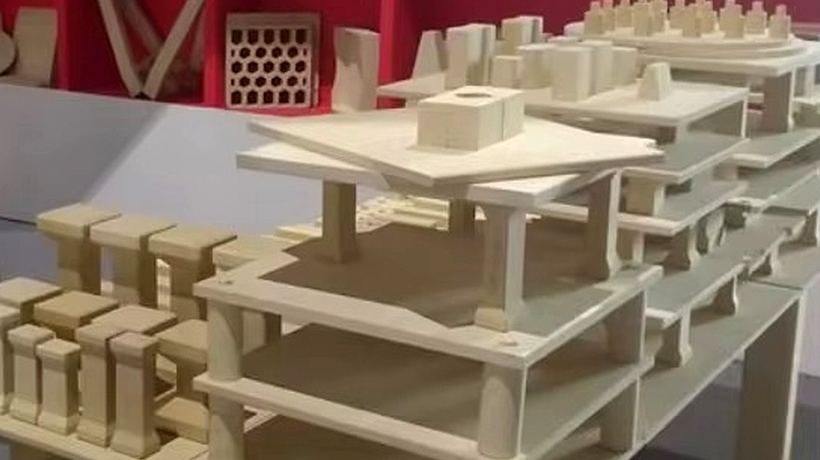
Thermal shock resistance is one of the important properties to consider when selecting kiln furniture. Material composition, thermal expansion, thermal conductivity, and component geometry all affect its ability to withstand temperature changes [1].
Use Correct Loading and Support Methods
Incorrect loading can damage kiln furniture even when the material itself is suitable.
If shelves are not properly supported, they may bend or crack under load. Unstable posts can also cause the entire shelf structure to move or collapse during operation.
Before loading the kiln, check the following:
Use posts and supports with suitable dimensions and load capacity.
Position supports according to the shelf design and loading arrangement.
Keep the load balanced across the available support area.
Avoid placing products too close to shelf edges.
Do not exceed the recommended load for the complete kiln furniture structure.
Check that each shelf is stable before adding the next level.
The correct number and position of supports depend on the shelf dimensions, material, load, and kiln arrangement. There is no single support layout suitable for every application.
For large industrial kilns, operators should follow the loading plan and technical instructions provided for the specific kiln furniture system.
Inspect and Maintain Kiln Furniture Regularly
Small defects can become serious problems if they are not identified early. A chipped edge, surface crack, or slight deformation may affect the stability of the next firing cycle.
A simple inspection routine can help prevent unexpected failures.
Before firing:
Check shelves, posts, setters, and beams for visible cracks.
Look for chipped edges and damaged corners.
Check whether shelves have become noticeably curved.
Remove components that are no longer safe for the intended load.
After firing:
Check for new cracks or surface damage.
Remove attached glaze or process residues using a suitable cleaning method.
Record repeated damage in the same kiln position.
Store unused kiln furniture in a dry and protected area.
Avoid using damaged components simply because the cracks appear small. A cracked shelf or support may fail under high-temperature loading and damage products or nearby equipment.
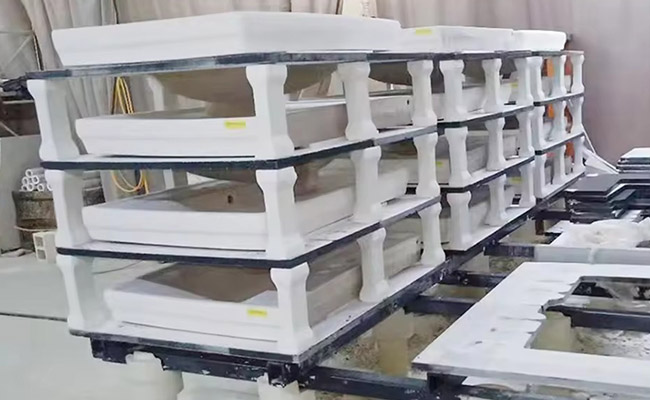
Surface coatings and kiln washes should also be selected according to the furniture material and firing process. Applying an unsuitable coating or using it too thickly may create surface contamination or other problems.
Select the Right Material for Your Application
Material selection has a direct effect on kiln furniture performance and service life. Different materials offer different combinations of strength, thermal-shock resistance, temperature capability, and weight.
Common choices include:
Cordierite-mullite: Often used for ceramic kiln shelves and supports. It offers a useful balance of thermal-shock resistance and structural performance in suitable firing conditions.
Mullite: Used in kiln furniture that requires good high-temperature performance. Its suitability depends on the product design, load, and operating temperature.
Silicon carbide (SiC): Used in applications that require high strength, good thermal conductivity, and resistance to thermal stress. It is commonly considered for demanding industrial kiln conditions.
However, material names alone are not enough to determine service life. The actual product quality, density, manufacturing process, dimensions, and operating conditions all matter.
Before choosing kiln furniture, provide the supplier with key information such as:
Maximum and normal firing temperatures
Heating and cooling cycle
Product weight and loading pattern
Kiln type and atmosphere
Required shelf or setter dimensions
Expected firing frequency
This information helps manufacturers recommend a suitable material and design rather than simply offering a standard product.
Work with Experienced Kiln Furniture Manufacturers
Choosing suitable kiln furniture can reduce premature damage and help maintain stable production. Experienced kiln furniture manufacturers should understand how material properties, product dimensions, support design, and operating conditions work together.
When comparing kiln furniture suppliers, ask about material specifications, working temperature, load requirements, dimensional tolerances, and available customization.
For industrial users, the right industrial kiln furniture should match the actual firing process. A product designed for one kiln may not provide the same service life in another application.
LAR Refractory supplies kiln furniture solutions for industrial high-temperature applications. By considering the operating temperature, loading conditions, and product requirements, users can select suitable kiln shelves, supports, setters, and other components for their production needs.
Extending kiln furniture service life requires a combination of proper material selection, balanced loading, controlled temperature changes, and regular inspection. These practices can help reduce avoidable damage and support more stable kiln operation.
References
[1] Finkelnburg, D. “Techno File: Kiln Furniture 101.” Ceramics Monthly, December 2022.
https://ceramicartsnetwork.org/ceramics-monthly/ceramics-monthly-article/techno-file-kiln-furniture-101
[2] Texas Department of Insurance, Division of Workers’ Compensation. Kiln Safety Training Program.
https://www.tdi.texas.gov/pubs/videoresource/stpelectrickiln.pdf
Online Message
RELATED PRODUCTS

LAR’s Kiln Furniture perforated Extruded Batts are high-temperature refractory support components used in ceramic firing systems. These kiln Batts support and separate ceramic products during firing. The design improves airflow and heat distribution inside the kiln. Manufacturers produce these batts by extrusion forming technology. The structure contains evenly distributed perforations. This design reduces weight and improves thermal efficiency. The material often uses mullite or similar refractory compositions. The product maintains stable performance under repeated firing cycles. Many industries use Kiln LAR’s Furniture perforated Extruded Batts in ceramic production. These industries include tableware, sanitary ware, electronic ceramics, and technical ceramics. A reliable Kiln Furniture perforated Extruded Batts supplier can provide stable quality and consistent dimensions.
LAR’s Kiln Furniture Base plates are essential refractory support components used in high-temperature kiln systems. These Kiln base plates provide a stable platform for stacking kiln furniture and ceramic products during firing. Manufacturers produce Kiln Furniture Base plates from high-quality refractory materials such as mullite or similar compositions. The production process includes high-temperature sintering to ensure structural stability. Each plate maintains consistent performance under repeated heating cycles. LAR’s Kiln Furniture Base plates suppliers design these products to improve kiln efficiency. The structure helps distribute loads evenly and supports uniform heat transfer. Many industries rely on these base plates to maintain stable firing conditions.
LAR’s Cordierite mullite kiln furniture is a widely used refractory support material in ceramic firing systems. This type of kiln furniture combines the advantages of mullite kiln furniture and cordierite kiln furniture. The material provides a balanced performance between thermal shock resistance and mechanical strength. Manufacturers produce this product by blending cordierite and mullite raw materials. The production process includes high-temperature sintering to form a stable crystal structure. The final product shows reliable performance under repeated firing cycles. Many mullite kiln furniture manufacturers supply this material for energy-efficient kilns. The structure helps reduce thermal stress and improves firing stability. Industries choose this material when they require both durability and resistance to rapid temperature changes.
LAR’s Ceramic kiln furniture refers to refractory components used to support, separate, and protect ceramic products during high-temperature firing. These products play a key role in maintaining stability inside the kiln. A professional ceramic kiln furniture manufacturer produces these components using materials such as mullite, cordierite, or silicon carbide. The manufacturing process includes shaping, drying, and high-temperature sintering. Each step ensures consistent structure and reliable performance. LAR’s Ceramic kiln furniture suppliers design different products to meet various kiln conditions. These components help improve heat distribution and support efficient firing cycles. Many industries rely on ceramic kiln furniture to maintain product quality and reduce production defects.
LAR’s Kiln furniture kit is a complete set of refractory components used inside a kiln to support ceramic products during firing. A typical kiln furniture kit includes shelves, posts, setters, and other supporting parts. Manufacturers design each kiln furniture kit to match specific kiln sizes and firing requirements. A custom Kiln Furniture kit allows users to optimize space and improve loading efficiency. The system helps maintain stable stacking and consistent heat distribution. Many users choose small kiln furniture kits for laboratory kilns or compact production kilns. These kits provide flexible configurations while maintaining reliable performance. The structure supports repeated firing cycles without significant deformation.
LAR’s Cordierite kiln shelves are widely used refractory support plates in ceramic firing processes. These shelves provide a stable surface for placing ceramic products during kiln operation. A professional cordierite kiln shelves manufacturer produces these shelves using cordierite-based materials. The material offers excellent resistance to thermal shock and supports repeated heating cycles. The production process includes forming, drying, and high-temperature firing to achieve a stable structure. LAR’s Cordierite kiln furniture is suitable for applications that require frequent temperature changes. Many ceramic producers use these shelves to improve firing efficiency and reduce product damage.
LAR’s Mullite kiln shelves are refractory plates used to support ceramic products during high-temperature firing. These shelves are an important part of mullite kiln furniture systems. A professional mullite kiln shelves manufacturer produces these shelves using high-purity mullite materials. The manufacturing process includes shaping and high-temperature sintering. This process forms a stable crystal structure that performs well in demanding kiln conditions. LAR’s Mullite kiln shelves are suitable for applications that require higher temperature resistance than cordierite kiln furniture. Many ceramic producers use these shelves in industrial kilns where stability and strength are important.
LAR’s Silicon carbide kiln shelves are high-performance refractory plates used in demanding kiln environments. These shelves are an important part of silicon carbide kiln furniture systems. Manufacturers produce silicon carbide kiln shelves using SiC-based materials through high-temperature sintering or reaction bonding processes. The material provides excellent thermal conductivity and high mechanical strength. These properties make the product suitable for fast firing and heavy load applications. Many industries choose sic kiln furniture when they require stable performance under extreme conditions. Silicon carbide kiln furniture improves heat transfer and supports efficient kiln operation.
LAR’s Alumina kiln shelves are high-performance refractory plates used in high-temperature ceramic firing. These shelves are an important part of alumina kiln furniture systems. Manufacturers produce high alumina kiln shelves using high-purity alumina materials. The production process includes precise forming and high-temperature sintering. This process creates a dense and stable structure that performs well under extreme kiln conditions. Many industries choose alumina kiln furniture when they require high strength and high temperature resistance. Alumina kiln shelves provide reliable support and maintain dimensional stability during repeated firing cycles.
LAR’s Round kiln posts are vertical refractory supports used in kiln stacking systems. These posts create stable spacing between kiln shelves and help maintain an organized structure during firing. Manufacturers produce round kiln posts using materials such as cordierite, mullite, or high alumina compositions. The production process includes forming and high-temperature sintering. This process ensures that each post maintains structural integrity under repeated thermal cycles. Many suppliers offer kiln posts for sale in standard sizes. Users can also choose custom round kiln posts to match specific kiln layouts. These posts play a key role in ensuring uniform heat distribution and stable loading conditions.
