
 English
 Русский
 Español
 Français
 Deutsch
 简体中文
简体中文
 Árabe
Árabe
 Português
 日本語
日本語
 한국어
한국어
 हिंदी
हिंदी
 Prancis
 Türkçe
 Tiếng Việt
 Italiano
 ไทย
ไทย

Why Do Precast Refractory Shapes Crack More Easily Than Standard Refractory Bricks?
Why Do Precast Refractory Shapes Crack More Easily Than Standard Refractory Bricks?
Cracking is a common concern in high-temperature furnace maintenance. Operators sometimes find that a precast refractory shapes develops cracks while nearby standard refractory bricks remain in good condition. This does not necessarily mean that the shaped component uses an inferior material.
In many cases, the difference comes from geometry, thermal stress, installation, and operating conditions.
A Practical Case: Cracks Around a Burner Opening
A customer operating a high-temperature furnace found cracks around a burner opening after several heating cycles.
The surrounding refractory bricks showed little damage, but the shaped component had several visible cracks. The customer initially believed that the material did not have sufficient temperature resistance.
After reviewing the application, the technical team found that the operating temperature was within the expected range.
The main issue was the component's geometry.
The burner opening created areas with different wall thicknesses. During heating, the thin sections responded to temperature changes faster than the thicker sections. This created uneven thermal expansion and concentrated stress around the opening.
The component was replaced, but the geometry was also improved. The transition between thick and thin sections was made smoother.
The customer later commented:
“We kept changing the material, but the crack always appeared in almost the same location. The shape was the real problem.”
This case shows why the cause of failure should be investigated before simply changing materials.
Why Complex Shapes Create More Stress
A standard refractory brick usually has a simple rectangular shape. Its dimensions are predictable, and several bricks are connected through regular joints.
A precast refractory component can contain holes, curves, sharp corners, thin sections, and thick sections.
These features affect how heat and stress move through the material.
When the furnace heats up, the refractory expands. During cooling, it contracts. If different areas expand at different rates, internal stress develops.
The more complicated the geometry, the more carefully thermal movement needs to be considered.
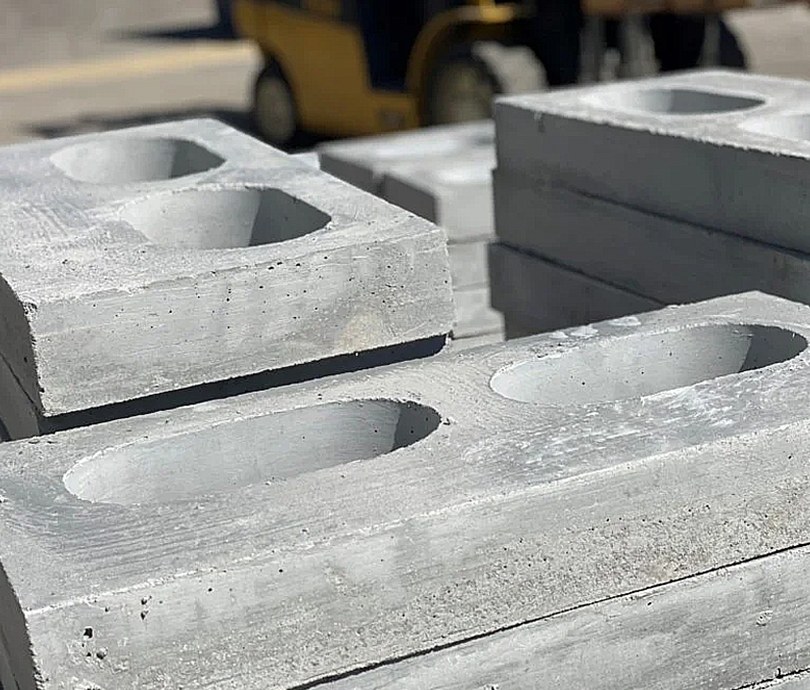
Thick and Thin Sections Are Common Weak Points
Sudden changes in thickness can create thermal gradients.
A thick section may heat and cool more slowly than a thin section. During repeated firing cycles, this difference can create stress at the transition area.
This problem is particularly important for burner blocks, special furnace shapes, and components with internal openings.
If cracks repeatedly appear near a thickness transition, changing the material alone may not solve the problem.
The component design should also be reviewed.
Sharp Corners Can Increase Crack Risk
Sharp internal corners can become stress concentration points.
When a component expands during heating, movement around a sharp corner can be restricted. Repeated heating and cooling may gradually create a crack.
Where the design allows, smoother transitions and suitable radii can help distribute stress more evenly.
This is especially useful for complex precast refractory shapes exposed to frequent thermal cycling.
Installation Can Also Cause Cracks
Some cracks are introduced before the component reaches normal operating temperature.
Shaped refractory components can be difficult to handle because of their size, weight, or irregular shape. Excessive force during lifting or positioning can create small internal defects.
Installation can also create problems when there is insufficient space for thermal expansion.
A component may fit perfectly when cold but experience significant pressure against surrounding materials after heating.
For this reason, installation conditions should be considered together with the refractory design.
Heating Procedure Matters
New refractory components should not always be heated as quickly as possible.
Moisture from installation materials can create internal pressure if the temperature rises too rapidly.
A controlled drying and heating process helps reduce this risk.
It is also useful to record the heating rate during the first firing. If cracking occurs during initial heating, the temperature history can help identify whether thermal stress or moisture was involved.
| Component Feature | Typical Risk | Main Reason | Recommended Check |
| Standard rectangular brick | Low–Medium | Relatively uniform thickness | Joint condition |
| Burner block with opening | Medium–High | Stress concentration around opening | Crack position and opening geometry |
| Sudden thickness transition | High | Uneven thermal expansion | Thickness transition |
| Sharp internal corner | High | Local stress concentration | Corner radius |
| Large integrated component | Medium–High | Greater thermal gradient | Heating and cooling rate |
| Thin-wall section | Medium–High | Faster temperature change | Wall thickness and support |
Why Standard Bricks Sometimes Last Longer
Standard refractory bricks have relatively simple and repeatable shapes.
The joints between individual bricks can also provide some room for thermal movement.
A large shaped component, on the other hand, may contain several different thicknesses and openings within one integrated structure.
This does not mean that standard bricks are always better.
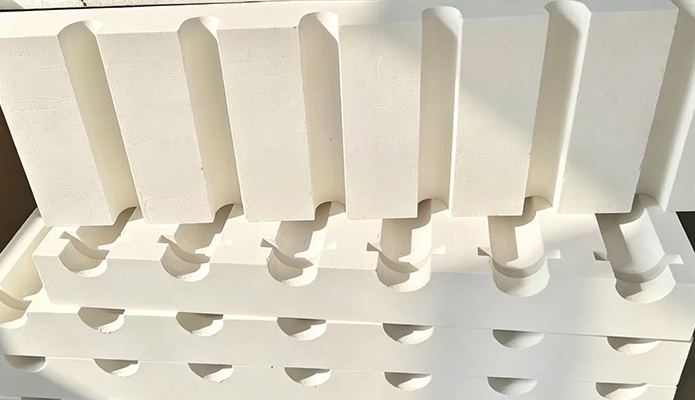
It means that precast refractory shapes require more attention to geometry and thermal movement.
How to Investigate a Cracked Component
Before replacing a damaged component, check several basic details.
Where did the crack start?
A crack near a corner or opening may indicate stress concentration.
When did the crack appear?
Cracking during initial heating may have a different cause from cracking after months of operation.
Does the same area crack repeatedly?
Repeated failure in the same location is a strong reason to review the design or installation.
Has the operating cycle changed?
Faster heating, more frequent shutdowns, or changes in production conditions can increase thermal stress.
These observations can provide useful information before selecting a replacement.
How to Reduce Cracking
Several practical measures can improve the reliability of shaped refractory components:
Avoid unnecessary sharp corners.
Reduce sudden changes in thickness.
Allow suitable space for thermal expansion.
Handle components carefully during installation.
Follow an appropriate drying and heating procedure.
Match the material to the actual working conditions.
Investigate repeated failures before changing material grades.
Precast refractory shapes can crack more easily than standard refractory bricks because their complex shapes create additional thermal and mechanical stress.
However, cracking does not automatically mean that the material is unsuitable.
In practical furnace applications, the most important factors include geometry, thermal cycling, installation, heating procedures, and material selection.
Online Message
RELATED PRODUCTS

LAR’s precast blocks are engineered refractory components designed for high-temperature industrial applications. These precast blocks are manufactured in controlled conditions to achieve stable quality and precise dimensions. Many industries use precast blocks to simplify installation and improve the reliability of thermal systems. A refractory precast block is produced using selected aggregates, high-temperature binders, and optimized formulations. This refractory precast block structure provides strong resistance to heat, thermal shock, and chemical attack. Manufacturers design precast blocks to perform reliably under continuous thermal load. LAR’s precast burner blocks are a specialized type of precast blocks used in combustion zones. These precast burner blocks support burners and help maintain stable flame distribution. Manufacturers ensure that each refractory precast block meets strict performance and dimensional requirements. LAR’s precast blocks perform well in complex furnace structures where traditional brick installation is difficult. Many users select precast burner blocks and standard precast blocks to reduce installation time and improve operational efficiency.
LAR’s burner block precast parts are high-temperature refractory components designed for industrial combustion systems. These burner block precast parts are used to support and protect burners in furnaces, kilns, and thermal processing equipment. Many industries rely on burner block precast parts to ensure stable flame control and efficient heat distribution. LAR’s burner block precast parts are manufactured using high-quality refractory aggregates and binders. The material structure provides excellent resistance to thermal shock, erosion, and chemical attack. A professional burner block precast parts supplier ensures that each product maintains precise dimensions and consistent performance. Manufacturers produce burner block precast parts through casting and controlled curing processes. The production method creates a dense and durable structure that withstands high-temperature operation. Many users select a reliable burner block precast parts supplier to achieve long service life and reduced maintenance. LAR’s burner block precast parts perform well in harsh combustion environments where temperature fluctuations and flame impact are common. These components play a critical role in maintaining burner efficiency and system safety.
LAR’s silicon Carbide Pusher Plates are high-performance components used in continuous and batch kilns for ceramics, glass, and metallurgical applications. The plates are made from high-purity silicon carbide, providing exceptional thermal conductivity and wear resistance. LAR’s silicon Carbide Pusher Plates provide high temperature resistance and excellent mechanical strength for kiln systems. The products support ceramic materials during continuous firing processes and maintain stable performance under repeated thermal cycling.Silicon carbide materials offer high thermal conductivity and excellent thermal shock resistance. These properties help improve heat transfer efficiency and reduce cracking or deformation during operation. LAR’s silicon carbide pusher plates are widely used in tunnel kilns, powder metallurgy furnaces, electronic ceramics production, and lithium battery material firing systems. The products help improve kiln efficiency and extend service life.Manufacturers produce each Silicon Carbide Pusher Plate through advanced sintering techniques. Many industrial users choose these plates to improve kiln efficiency and extend service life.
LAR’s electric Furnace Cover Precast Parts are high-performance refractory components designed for electric arc furnaces (EAF). The products are also known as Electric Arc Furnace Roof Prefabricated Parts. They are made from high-quality refractory materials to withstand extreme temperatures and chemical corrosion in steelmaking processes. LAR’s electric Furnace Cover Precast Parts are designed for furnace roof and cover systems in high-temperature industrial equipment. These precast shapes improve installation efficiency and reduce on-site refractory construction time.High alumina-based materials provide strong structural stability and good resistance to thermal shock. The precast parts maintain integrity during repeated heating and cooling cycles in electric furnace operation.Mullite and low cement castable systems help improve thermal insulation and reduce heat loss from the furnace cover. These materials also support stable performance under long-term high-temperature conditions. Manufacturers produce each Electric Furnace Cover using advanced casting and curing techniques. The final precast parts have a dense structure with a porosity of about 5–6%, ensuring strength and long service life. Many steel plants choose these prefabricated parts to improve furnace safety and operational efficiency.
LAR’s burner Blocks are essential refractory components used in industrial combustion systems. These Burner Blocks provide stable support and protection for burners in furnaces, kilns, and thermal processing equipment. Many industries depend on Burner Blocks to maintain efficient combustion and uniform heat distribution. A refractory burner block is manufactured from high-quality refractory aggregates and binders. This refractory burner block structure offers strong resistance to high temperature, flame impact, and chemical corrosion. Manufacturers design Burner Blocks to ensure stable operation under continuous thermal load. Customized Burner Block solutions allow users to match specific burner designs and furnace configurations. A Customized Burner Block can be produced with precise shapes, openings, and mounting features. Manufacturers ensure that each refractory burner block meets strict dimensional and performance requirements. LAR’s burner Blocks perform reliably in harsh environments where temperature fluctuations and mechanical stress are common. Many users choose Customized Burner Block designs to improve installation accuracy and extend service life.
LAR’s refractory Anchor Blocks are critical components used to secure refractory linings in high-temperature furnaces. These products, also known as Precast Anchor Block or Refractory Anchor Brick, provide stable support for bricks and precast sections in steelmaking and metallurgical applications. Cast Anchor Components are designed for reliable performance under thermal stress and mechanical load. LAR’s anchor Blocks provide structural fixing support for refractory linings in high-temperature industrial equipment. The products help secure castables, fibers, and precast linings to furnace shells.Precast Anchor Blocks are manufactured in controlled shapes to improve installation efficiency. These components reduce on-site forming work and ensure more stable lining positioning. LAR’s refractory Anchor Bricks offer good mechanical strength and thermal stability. The design helps maintain lining integrity during repeated heating and cooling cycles.Cast Anchor Components are used for customized furnace structures with complex geometry. These parts improve bonding performance between refractory layers and steel shells.Anchor systems are widely used in industrial furnaces, boilers, kiln linings, and petrochemical heating equipment. The products help extend lining life and improve operational safety.
LAR’s precast Refractory Shapes are factory-formed refractory components designed for high-temperature industrial applications. These Precast Refractory Shapes are widely used in furnaces, kilns, burners, and thermal processing systems. Many industries select Precast Refractory Shapes to improve installation efficiency and reduce on-site construction time. LAR’s precast Shapes are produced under controlled casting conditions before installation. This approach ensures stable density, accurate dimensions, and consistent performance. Custom Refractory Cast Shapes are designed to match specific furnace structures and operating environments. LAR’s special Shaped Refractory Parts are used in complex areas where standard bricks cannot fit. These Special Shaped Refractory Parts improve sealing performance and thermal stability in critical zones. Precast Refractory Shapes can be manufactured in various geometries based on engineering drawings. Manufacturers use vibration casting, molding, and high-temperature curing processes to produce Precast Refractory Shapes. These methods ensure uniform internal structure and reliable mechanical strength. A professional supplier of Precast Shapes ensures strict quality control from raw materials to final curing.
