
 English
 Русский
 Español
 Français
 Deutsch
 简体中文
简体中文
 Árabe
Árabe
 Português
 日本語
日本語
 한국어
한국어
 हिंदी
हिंदी
 Prancis
 Türkçe
 Tiếng Việt
 Italiano
 ไทย
ไทย

How Wear Resistant Ceramic Plates Protect Industrial Equipment
Industrial equipment that handles abrasive materials can wear faster than expected. Conveyors, chutes, hoppers, bins, and transfer points are often exposed to hard particles every day.
As material moves through the equipment, particles slide, fall, and hit the working surface. Over time, the steel can become thinner. Local areas may wear much faster than the rest of the equipment.
A wear resistant ceramic plate can be used in these high-wear areas. It creates a hard protective layer between the abrasive material and the steel surface.
Where Abrasive Wear Happens in Industrial Equipment
Abrasive wear is common in equipment that handles minerals, sand, cement, clinker, coal, slag, and other bulk materials.
The level of wear is not the same in every area. Straight sections may have mainly sliding wear. Drop points can receive stronger impact. Bends and discharge areas can also wear faster because the material changes direction.
Particle size and hardness also affect wear. Large particles can create strong impact. Fine particles can cause continuous surface abrasion.
For this reason, operators should first identify where the equipment wears most. Protecting these areas can be more useful than using the same wear material everywhere.
How Wear Resistant Ceramic Plates Protect Steel Surfaces
A wear resistant ceramic plate acts as a protective layer on the equipment surface.
Alumina ceramic is widely used for industrial wear protection because of its high hardness and resistance to abrasion. When abrasive material contacts the ceramic surface, the ceramic takes much of the wear.
The steel base underneath provides structural support. The ceramic layer protects the steel from direct contact with the material flow.
However, ceramic hardness is only one part of the design. Plate thickness, bonding method, impact level, temperature, and installation quality can also affect service performance.
A plate suitable for sliding abrasion may not be suitable for an area with heavy impact. The working condition should always be considered before selecting the material.
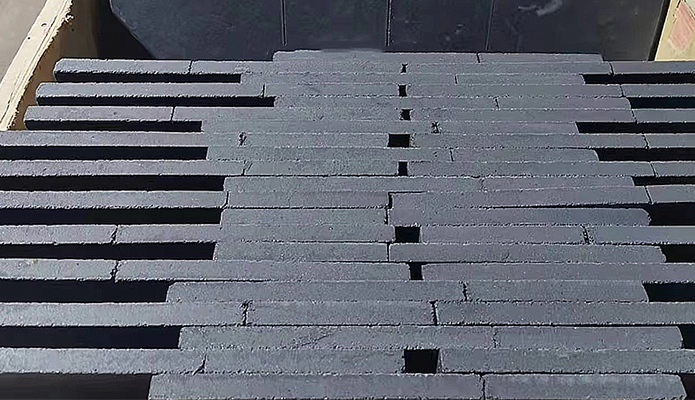
Why Wear Resistant Plates Need the Right Installation
Even a good wear resistant plate can perform poorly if it is installed incorrectly.
The plate should cover the actual wear zone. Gaps between plates should be controlled where possible. Edges and corners also need attention because they can become local wear points.
The installation method depends on the equipment and operating conditions. Bonded ceramic plates may be suitable for some areas. Mechanical fixing may be needed in other applications.
The surface below the plate should also be prepared properly. Dust, oil, loose material, and moisture can affect bonding.
For equipment exposed to impact, the support structure must also be checked. A ceramic plate should not be expected to solve a structural problem.
Custom Wear Resistant Plate for Complex Equipment Shapes
Standard wear resistant plates are useful for flat and simple surfaces. Industrial equipment is not always simple.
Chutes and hoppers may have curved sections, narrow areas, openings, bolt holes, and changes in direction. A standard plate may not cover these areas well.
A custom wear resistant plate can be made to match the installation area more closely. Size, thickness, shape, edges, and holes can be considered during the design.
Custom plates are useful when wear is concentrated in specific zones. They can also reduce unnecessary cutting and fitting work during installation.
The goal is not simply to cover more surface. The goal is to place the right protection where the wear actually occurs.
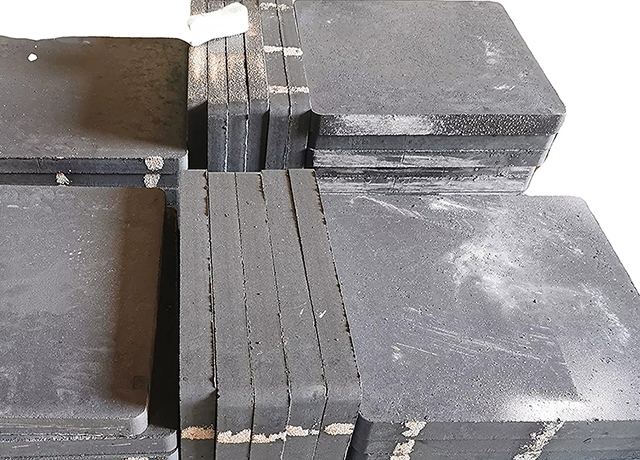
Common Applications of Ceramic Wear Protection
Wear resistant ceramic plates are used in many bulk material handling applications.
Common areas include:
Material chutes
Transfer points
Hoppers
Storage bins
Conveyor equipment
Discharge areas
Mineral handling equipment
Powder processing equipment
The required plate design can vary between applications.
For example, a transfer chute may need stronger impact protection near the material drop point. A conveyor section may mainly need protection against sliding abrasion.
Temperature should also be considered. Some applications involve hot materials, while others operate at normal ambient conditions. The ceramic material, adhesive, and installation method should match the working temperature.
Practical Maintenance Tips for Wear Protection
Wear protection should be inspected during normal equipment maintenance.
Operators can check for:
Cracked ceramic pieces
Loose plates
Worn edges
Damaged bonding areas
Exposed steel
Gaps between plates
Early inspection can help identify local wear before the steel structure is seriously damaged.
If one area wears much faster than the rest, the material flow should also be checked. The cause may be an impact point, sharp change in direction, uneven feeding, or a change in material properties.
Replacing only the damaged area may be practical when the remaining plates are still in good condition.
The main purpose of a wear resistant plate is to protect the equipment from repeated abrasion. A wear resistant ceramic plate can provide a hard surface for high-wear areas, while a custom wear resistant plate can fit more complex equipment shapes.
The best result comes from matching the ceramic material, plate design, installation method, and wear condition. Regular inspection then helps operators keep the protection working as the equipment continues to run.
Online Message
RELATED PRODUCTS

LAR’s Wear-resistant ceramic pipes/tubes are high-performance conveying components designed for severe abrasion, corrosion, and high-flow industrial environments. These wear-resistant ceramic pipes/tubes are widely used in mining, power, steel, and chemical industries. Many systems rely on wear-resistant ceramic pipes/tubes to extend pipeline life and reduce maintenance downtime. LAR’s Wear resistant ceramic tube products are designed for straight or curved pipeline sections that handle abrasive media. This wear resistant ceramic tube provides a smooth internal surface that reduces friction and material loss during transport. Wear resistant ceramic pipe is commonly used in pneumatic and hydraulic conveying systems where particle erosion is severe. LAR’s Ceramic tile lined pipe is another common structure used for complex pipeline conditions. This ceramic tile lined pipe uses high-hardness ceramic tiles bonded to a steel pipe body to create strong wear protection. Manufacturers design ceramic tile lined pipe systems to improve durability in high-impact and high-velocity flow environments.
Silicon carbide wear resistant ceramics are advanced materials designed for extreme abrasion and high-temperature environments. These products are mainly made from silicon carbide (SiC). The silicon carbide wear plates provide excellent resistance to wear, corrosion, and thermal shock. LAR Silicon Carbide Wear Resistant Ceramic delivers strong protection in high-abrasion industrial systems. This product uses high-purity silicon carbide materials and advanced sintering technology. The structure gives the ceramic high hardness, low wear loss, and stable chemical performance. Many mining plants, power stations, cement factories, and bulk material handling systems use silicon carbide wear resistant ceramics to reduce equipment damage and extend service life. LAR designs these products for harsh operating environments with strong friction and particle impact. The material keeps stable performance under continuous wear conditions. Many customers choose silicon carbide wear plates because they provide better wear resistance than ordinary metal liners. The dense ceramic structure also helps reduce maintenance frequency and shutdown costs. LAR produces different shapes and customized sizes for various industrial equipment. Engineers can install sic ceramic linings inside chutes, cyclones, hoppers, pipelines, separators, and transfer systems. These ceramic parts protect equipment surfaces from rapid wear caused by sand, ore, ash, coal powder, and other abrasive materials.
LAR manufactures wear resistant ceramic plates for heavy abrasion industrial environments. A wear resistant ceramic plate from LAR uses high-purity ceramic materials to ensure strong mechanical stability. This wear resistant plate protects equipment surfaces from continuous friction, impact, and particle erosion. LAR produces each wear resistant ceramic plate through pressing and high-temperature sintering processes. This wear resistant plate forms a dense microstructure that improves surface strength and durability. A custom wear resistant plate supports precise adaptation to different equipment layouts and installation conditions. Many industries such as mining, cement, steel, and power generation rely on wear resistant ceramic plates. A wear resistant ceramic plate is commonly installed in chutes, hoppers, cyclones, and conveying systems. A custom wear resistant plate from LAR helps extend equipment lifespan and reduce maintenance frequency in harsh working environments.
LAR’s Kiln Furniture Base plates are essential refractory support components used in high-temperature kiln systems. These Kiln base plates provide a stable platform for stacking kiln furniture and ceramic products during firing. Manufacturers produce Kiln Furniture Base plates from high-quality refractory materials such as mullite or similar compositions. The production process includes high-temperature sintering to ensure structural stability. Each plate maintains consistent performance under repeated heating cycles. LAR’s Kiln Furniture Base plates suppliers design these products to improve kiln efficiency. The structure helps distribute loads evenly and supports uniform heat transfer. Many industries rely on these base plates to maintain stable firing conditions.
LAR's silicon carbide plates are high-performance refractory and structural components used in high-temperature and wear-resistant applications. These plates provide excellent mechanical strength and thermal stability. Manufacturers produce silicon carbide ceramic plate products using advanced processes such as reaction bonding or sintering. The material offers high hardness, good thermal conductivity, and strong resistance to oxidation. Each silicon carbide plate maintains stable performance under harsh working conditions. LAR's silicon carbide plates are widely used in kiln systems, industrial furnaces, and mechanical equipment. Many users evaluate silicon carbide plate price based on material grade, size, and production method.
LAR produces ceramic wear resistant linings using high-purity alumina ceramics. The material forms a dense and hard structure after sintering. This structure gives the product strong resistance to abrasion and erosion. LAR designs ceramic wear linings for demanding industries such as mining, cement, steel, and power generation. These industries require reliable protection for equipment exposed to bulk materials. The product protects chutes, hoppers, cyclones, and pipelines from continuous wear. LAR supplies a wide range of ceramic wear liners in standard tiles, engineered shapes, and composite panels. The product can adapt to flat, curved, and complex surfaces. LAR also integrates rubber or steel backing into ceramic wear resistant linings to improve impact absorption. This combination enhances durability under mixed wear conditions. The product supports several installation methods, including adhesive bonding and mechanical fixing. LAR ensures that ceramic wear linings reduce maintenance frequency and extend equipment service life.
LAR’s silicon Carbide Pusher Plates are high-performance components used in continuous and batch kilns for ceramics, glass, and metallurgical applications. The plates are made from high-purity silicon carbide, providing exceptional thermal conductivity and wear resistance. LAR’s silicon Carbide Pusher Plates provide high temperature resistance and excellent mechanical strength for kiln systems. The products support ceramic materials during continuous firing processes and maintain stable performance under repeated thermal cycling.Silicon carbide materials offer high thermal conductivity and excellent thermal shock resistance. These properties help improve heat transfer efficiency and reduce cracking or deformation during operation. LAR’s silicon carbide pusher plates are widely used in tunnel kilns, powder metallurgy furnaces, electronic ceramics production, and lithium battery material firing systems. The products help improve kiln efficiency and extend service life.Manufacturers produce each Silicon Carbide Pusher Plate through advanced sintering techniques. Many industrial users choose these plates to improve kiln efficiency and extend service life.
