
 English
 Русский
 Español
 Français
 Deutsch
 简体中文
简体中文
 Árabe
Árabe
 Português
 日本語
日本語
 한국어
한국어
 हिंदी
हिंदी
 Prancis
 Türkçe
 Tiếng Việt
 Italiano
 ไทย
ไทย

LAR | Choosing the Right Kiln Furniture for High-Temperature Ceramic Production
LAR | Choosing the Right Kiln Furniture for High-Temperature Ceramic Production
Introduction: Why the Right Kiln Furniture Choice Matters
In high-temperature ceramic production, many manufacturers focus on kiln temperature, firing curves, and raw materials, but they often overlook one important factor that directly affects production stability — kiln furniture.
Incorrect selection of kiln support components can create several problems:
uneven firing results
product deformation
reduced loading capacity
frequent replacement of furnace components
increased production costs
Based on years of communication with ceramic manufacturers, LAR has found that most kiln furniture problems are not caused by material quality alone. In many cases, the issue comes from selecting a structure that does not match the actual firing conditions.
A successful ceramic production line requires kiln furniture that fits the product size, firing temperature, loading method, and operating cycle.
A Customer Case: Improving Ceramic Production Stability Through Better Kiln Furniture Selection
A ceramic manufacturer producing high-temperature ceramic products contacted LAR because they were experiencing unstable production performance.
The customer reported that their existing firing process had three major issues:
ceramic products occasionally showed deformation after firing
kiln shelves required frequent replacement
production efficiency decreased because operators needed to adjust loading methods repeatedly
At first, the customer believed the problem was related to kiln temperature control. However, after reviewing the production process, LAR engineers found that the main issue was the existing support structure.
The original ceramic kiln furniture system had insufficient load distribution capability. During long-term operation, repeated heating and cooling cycles caused gradual deformation of some support components.
Instead of simply replacing damaged parts, LAR analyzed the complete firing process, including:
product weight
shelf loading arrangement
firing temperature
heating and cooling speed
kiln atmosphere
After adjusting the kiln furniture design, the customer achieved more stable firing performance.
The production manager shared:
“After changing the support structure, the firing process became easier to manage. We reduced unexpected adjustments and improved production consistency.”
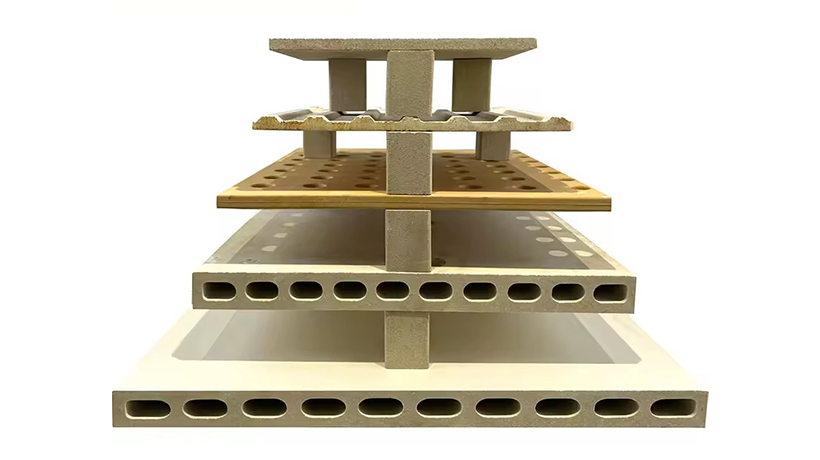
How to Select Suitable Kiln Furniture for Different Ceramic Applications
Selecting ceramic kiln furniture requires more than considering maximum temperature resistance. The actual working environment determines which structure and material combination will perform best.
1. Selecting Kiln Shelves Based on Product Weight and Firing Requirements
Kiln shelves are the main supporting surface during ceramic firing. Many production problems are related to incorrect shelf selection.
When choosing kiln shelves, manufacturers should consider:
product weight per loading area
shelf thickness
shelf flatness
firing temperature
thermal cycling frequency
For lightweight ceramic products, thinner shelves may improve kiln capacity. However, heavier products require stronger support to prevent bending during repeated firing.
One customer producing large ceramic components previously used oversized shelves because they wanted maximum strength. However, the heavier structure increased energy consumption and reduced loading efficiency.
After reviewing the application, LAR recommended a more suitable kiln shelf design. The customer increased effective kiln space while maintaining stable firing quality.
2. Choosing Kiln Posts According to Load Distribution
Kiln posts play an important role in supporting kiln shelves and maintaining the vertical stability of the firing structure.
A common mistake is using the same kiln post arrangement for different products.
In practical applications, engineers usually evaluate:
shelf size
total loading weight
furnace height
support distance
Incorrect spacing between kiln posts may cause uneven pressure distribution. Over time, this can lead to shelf deformation or unstable stacking.
For continuous ceramic production, stable support is essential because even small structural changes can influence final product quality.
3. Understanding the Importance of Kiln Beams in Large Kiln Systems
Large industrial kilns often require stronger supporting structures because the loading weight is significantly higher.
Kiln beams provide structural support for heavy-duty firing systems. Their performance directly affects the reliability of the kiln operation.
During one project, a customer operating a large ceramic kiln experienced repeated beam damage. The original design did not fully consider the combination of high temperature and mechanical load.
LAR engineers reviewed the failure pattern and suggested improving the beam structure according to the actual operating conditions.
After installation, the customer reported:
“The new design performed better during continuous operation. Maintenance frequency was reduced, and production planning became more predictable.”
This case showed that customized solutions are often more effective than selecting standard components without considering operating conditions.
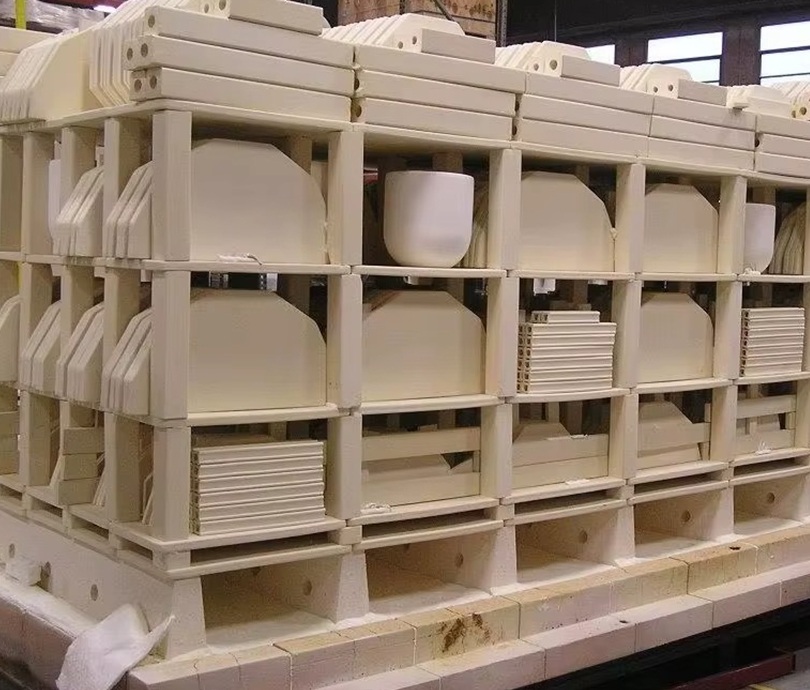
Why Customized Kiln Furniture Can Improve Long-Term Production Efficiency
Every ceramic production line has different requirements.
Factors such as:
ceramic product shape
kiln dimensions
firing temperature
production frequency
can influence the ideal support design.
A professional kiln furniture supplier should not only provide standard components but also understand how the products will be used in real production environments.
LAR provides customized kiln furniture solutions based on customer requirements, including:
special size kiln shelves
customized support structures
optimized loading solutions
The goal is not simply to provide components but to help customers improve firing stability and reduce unnecessary operating costs.
Practical Experience: Avoiding Common Kiln Furniture Selection Mistakes
Through communication with ceramic manufacturers, several common mistakes are frequently observed.
Choosing Materials Only by Temperature Rating
A higher temperature rating does not always mean better performance.
The material must also match:
thermal shock conditions
mechanical loading
firing atmosphere
Ignoring Product Loading Design
Even high-quality kiln furniture may fail if the loading method creates uneven stress.
Proper stacking design is equally important.
Replacing Damaged Parts Without Finding the Cause
Frequent replacement may temporarily solve problems, but it does not address the original reason for failure.
A complete evaluation can help identify whether the issue comes from:
material selection
structure design
operation method
LAR’s Experience as a Ceramic Kiln Furniture Manufacturer
As a professional kiln shelves manufacturer, LAR focuses on providing reliable support solutions for high-temperature ceramic production.
The company works with customers to understand their production environment before recommending suitable solutions.
LAR’s ceramic kiln furniture solutions are applied in different industries, including:
advanced ceramics
electronic ceramics
sanitary ceramics
industrial ceramic production
With practical application experience, LAR helps customers improve kiln stability, reduce downtime, and achieve more consistent firing results.
Conclusion: The Right Kiln Furniture Creates More Stable Ceramic Production
Choosing suitable kiln furniture is an important step in improving ceramic manufacturing efficiency.
The best solution is not always the strongest or most expensive option. It is the solution that matches the actual production conditions.
Through proper evaluation of kiln shelves, kiln posts, kiln beams, and customized structures, manufacturers can reduce production problems and improve long-term operating performance.
For ceramic producers looking for a reliable kiln furniture supplier, LAR provides professional experience and customized solutions based on real industrial requirements.
Online Message
RELATED PRODUCTS

LAR’s Kiln Furniture Base plates are essential refractory support components used in high-temperature kiln systems. These Kiln base plates provide a stable platform for stacking kiln furniture and ceramic products during firing. Manufacturers produce Kiln Furniture Base plates from high-quality refractory materials such as mullite or similar compositions. The production process includes high-temperature sintering to ensure structural stability. Each plate maintains consistent performance under repeated heating cycles. LAR’s Kiln Furniture Base plates suppliers design these products to improve kiln efficiency. The structure helps distribute loads evenly and supports uniform heat transfer. Many industries rely on these base plates to maintain stable firing conditions.
LAR’s Cordierite mullite kiln furniture is a widely used refractory support material in ceramic firing systems. This type of kiln furniture combines the advantages of mullite kiln furniture and cordierite kiln furniture. The material provides a balanced performance between thermal shock resistance and mechanical strength. Manufacturers produce this product by blending cordierite and mullite raw materials. The production process includes high-temperature sintering to form a stable crystal structure. The final product shows reliable performance under repeated firing cycles. Many mullite kiln furniture manufacturers supply this material for energy-efficient kilns. The structure helps reduce thermal stress and improves firing stability. Industries choose this material when they require both durability and resistance to rapid temperature changes.
LAR’s Ceramic kiln furniture refers to refractory components used to support, separate, and protect ceramic products during high-temperature firing. These products play a key role in maintaining stability inside the kiln. A professional ceramic kiln furniture manufacturer produces these components using materials such as mullite, cordierite, or silicon carbide. The manufacturing process includes shaping, drying, and high-temperature sintering. Each step ensures consistent structure and reliable performance. LAR’s Ceramic kiln furniture suppliers design different products to meet various kiln conditions. These components help improve heat distribution and support efficient firing cycles. Many industries rely on ceramic kiln furniture to maintain product quality and reduce production defects.
LAR’s Kiln furniture kit is a complete set of refractory components used inside a kiln to support ceramic products during firing. A typical kiln furniture kit includes shelves, posts, setters, and other supporting parts. Manufacturers design each kiln furniture kit to match specific kiln sizes and firing requirements. A custom Kiln Furniture kit allows users to optimize space and improve loading efficiency. The system helps maintain stable stacking and consistent heat distribution. Many users choose small kiln furniture kits for laboratory kilns or compact production kilns. These kits provide flexible configurations while maintaining reliable performance. The structure supports repeated firing cycles without significant deformation.
LAR’s Cordierite kiln shelves are widely used refractory support plates in ceramic firing processes. These shelves provide a stable surface for placing ceramic products during kiln operation. A professional cordierite kiln shelves manufacturer produces these shelves using cordierite-based materials. The material offers excellent resistance to thermal shock and supports repeated heating cycles. The production process includes forming, drying, and high-temperature firing to achieve a stable structure. LAR’s Cordierite kiln furniture is suitable for applications that require frequent temperature changes. Many ceramic producers use these shelves to improve firing efficiency and reduce product damage.
LAR’s Mullite kiln shelves are refractory plates used to support ceramic products during high-temperature firing. These shelves are an important part of mullite kiln furniture systems. A professional mullite kiln shelves manufacturer produces these shelves using high-purity mullite materials. The manufacturing process includes shaping and high-temperature sintering. This process forms a stable crystal structure that performs well in demanding kiln conditions. LAR’s Mullite kiln shelves are suitable for applications that require higher temperature resistance than cordierite kiln furniture. Many ceramic producers use these shelves in industrial kilns where stability and strength are important.
LAR’s Silicon carbide kiln shelves are high-performance refractory plates used in demanding kiln environments. These shelves are an important part of silicon carbide kiln furniture systems. Manufacturers produce silicon carbide kiln shelves using SiC-based materials through high-temperature sintering or reaction bonding processes. The material provides excellent thermal conductivity and high mechanical strength. These properties make the product suitable for fast firing and heavy load applications. Many industries choose sic kiln furniture when they require stable performance under extreme conditions. Silicon carbide kiln furniture improves heat transfer and supports efficient kiln operation.
LAR’s Alumina kiln shelves are high-performance refractory plates used in high-temperature ceramic firing. These shelves are an important part of alumina kiln furniture systems. Manufacturers produce high alumina kiln shelves using high-purity alumina materials. The production process includes precise forming and high-temperature sintering. This process creates a dense and stable structure that performs well under extreme kiln conditions. Many industries choose alumina kiln furniture when they require high strength and high temperature resistance. Alumina kiln shelves provide reliable support and maintain dimensional stability during repeated firing cycles.
