
 English
 Русский
 Español
 Français
 Deutsch
 简体中文
简体中文
 Árabe
Árabe
 Português
 日本語
日本語
 한국어
한국어
 हिंदी
हिंदी
 Prancis
 Türkçe
 Tiếng Việt
 Italiano
 ไทย
ไทย

Silicon Carbide vs Silicon Nitride Bonded Silicon Carbide: Differences and Applications
Silicon Carbide vs Silicon Nitride Bonded Silicon Carbide: Differences and Applications
In industrial kilns, choosing the right kiln furniture material directly affects production stability, service life, and maintenance costs. Silicon carbide and silicon nitride bonded silicon carbide are both widely used in high-temperature applications, but their performance and suitable working conditions are different. For customers selecting materials, the key question is not simply which material is better, but which one matches the actual kiln conditions.
What Is the Difference?
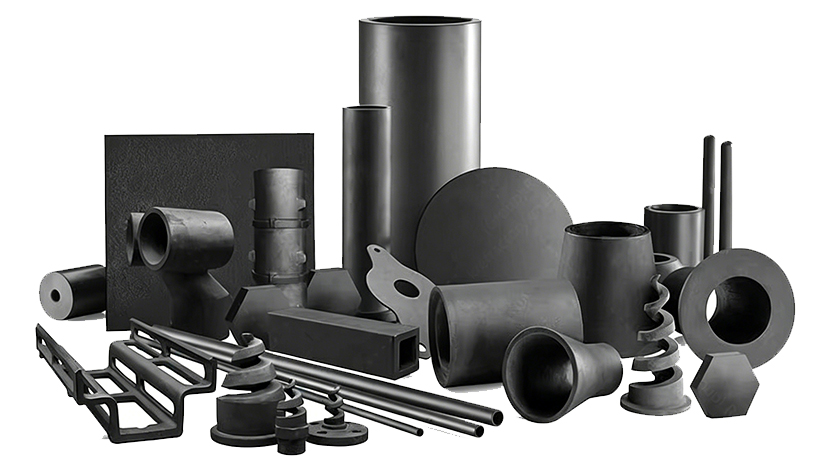
Silicon carbide products use silicon carbide as the main structural material, while silicon nitride bonded silicon carbide uses silicon nitride as the bonding phase between silicon carbide particles. This structure provides good high-temperature strength and dimensional stability, particularly when components are exposed to repeated heating and cooling.
In general kiln applications, silicon carbide can provide reliable performance where the mechanical load and thermal conditions are relatively moderate. Silicon nitride bonded silicon carbide is more suitable when deformation resistance, long-term stability, and load-bearing performance are more important.
Which Is Better for Industrial Kilns?
There is no universal answer. The choice should be based on operating temperature, firing cycle, product weight, component size, support distance, and cooling conditions.
For conventional kiln furniture with moderate loading, silicon carbide can be a practical choice. It is commonly used for shelves, supports, setters, and other high-temperature components.
When the kiln operates continuously at high temperature, carries heavier products, or uses large-size kiln furniture, silicon nitride bonded silicon carbide is often considered because of its excellent structural stability.
One ceramic manufacturer we worked with experienced gradual deformation of large kiln shelves after increasing product loading. The original shelves had performed well under the previous production conditions, but the higher load and repeated firing cycles created additional stress. Instead of simply increasing the shelf thickness, we reviewed the support distance and loading conditions and changed the material selection. The new silicon nitride bonded silicon carbide components showed better dimensional stability during repeated firing.
This case highlights an important point: the same kiln furniture material can perform differently when production conditions change.
Do Not Choose Material Based Only on Temperature
A common mistake is selecting kiln furniture only according to the maximum furnace temperature. For example, if a kiln operates at 1,400°C, some buyers immediately look for a material rated above this temperature.
In practice, we also consider:
Product loading weight
Firing cycle duration
Heating and cooling speed
Component dimensions
Support distance
Furnace atmosphere
Required service life
A lightweight ceramic product placed on a small shelf has very different requirements from a heavy product loaded onto a large shelf. Even at the same temperature, the material selection may be different.
Thermal cycling is another important consideration. Repeated heating and cooling can gradually create stress within kiln furniture. If production changes from slow cooling to rapid cooling, components that previously performed well may begin to crack or deform.
Practical Selection for Kiln Applications
For general kiln applications, moderate loading, and relatively stable firing conditions, silicon carbide is often sufficient.
For heavy loading, large components, frequent thermal cycling, or strict dimensional stability requirements, silicon nitride bonded silicon carbide is generally worth considering.
LAR recommends evaluating the actual working conditions before selecting kiln furniture rather than simply choosing the highest-grade material. Providing the kiln temperature, component dimensions, loading weight, support arrangement, and firing cycle allows a more practical material recommendation.
The right choice is not necessarily the most expensive material. It is the material that provides stable performance under the actual kiln conditions and delivers the required service life.
Online Message
RELATED PRODUCTS

Silicon carbide wear resistant ceramics are advanced materials designed for extreme abrasion and high-temperature environments. These products are mainly made from silicon carbide (SiC). The silicon carbide wear plates provide excellent resistance to wear, corrosion, and thermal shock. LAR Silicon Carbide Wear Resistant Ceramic delivers strong protection in high-abrasion industrial systems. This product uses high-purity silicon carbide materials and advanced sintering technology. The structure gives the ceramic high hardness, low wear loss, and stable chemical performance. Many mining plants, power stations, cement factories, and bulk material handling systems use silicon carbide wear resistant ceramics to reduce equipment damage and extend service life. LAR designs these products for harsh operating environments with strong friction and particle impact. The material keeps stable performance under continuous wear conditions. Many customers choose silicon carbide wear plates because they provide better wear resistance than ordinary metal liners. The dense ceramic structure also helps reduce maintenance frequency and shutdown costs. LAR produces different shapes and customized sizes for various industrial equipment. Engineers can install sic ceramic linings inside chutes, cyclones, hoppers, pipelines, separators, and transfer systems. These ceramic parts protect equipment surfaces from rapid wear caused by sand, ore, ash, coal powder, and other abrasive materials.
LAR's silicon carbide sealing rings are high-performance mechanical sealing components used in demanding industrial environments. These components provide reliable sealing performance under high temperature, high pressure, and corrosive conditions. Manufacturers produce silicon carbide seal rings using advanced sintering or reaction bonding processes. The material offers excellent hardness, wear resistance, and chemical stability. Each silicon carbide sealing ring maintains precise dimensions and stable performance during operation. LAR's silicon carbide seal rings are widely used in pumps, compressors, and rotating equipment. Many industries rely on silicon carbide seal rings to reduce leakage and improve system efficiency.
LAR's silicon carbide burner nozzles are critical components used in high-temperature combustion systems. These silicon carbide burner nozzles guide and control flame distribution inside industrial furnaces and kilns. Many industries rely on silicon carbide ceramic burner nozzle products to achieve stable combustion and efficient fuel usage. Manufacturers produce silicon carbide burner nozzles using reaction bonded or recrystallized silicon carbide materials. These materials create dense and wear-resistant structures. The structure ensures that refractory silicon carbide burner nozzles maintain stable performance under continuous high-temperature operation. LAR's silicon carbide ceramic burner nozzle products provide excellent resistance to oxidation and chemical corrosion. These silicon carbide burner nozzles operate reliably in environments with gas, oil, or mixed fuels. Many users choose refractory silicon carbide burner nozzles because the material reduces deformation and extends service life. Industries such as ceramics, metallurgy, and petrochemical processing widely use silicon carbide burner nozzles. These silicon carbide ceramic burner nozzle components improve flame uniformity and enhance thermal efficiency.
LAR's silicon nitride nozzles are advanced ceramic components used in high-temperature and high-wear environments. These silicon nitride nozzles control fluid flow, gas injection, or material discharge in industrial systems. Many industries rely on silicon nitride ceramic nozzles to achieve stable performance and long service life. Manufacturers produce silicon nitride nozzles using precision forming and high-temperature sintering processes. The process creates a dense and uniform microstructure. Each silicon nitride ceramic nozzles product maintains strength under thermal and mechanical stress. Silicon nitride nozzle liners use the same material system and provide internal protection for metal assemblies. LAR's silicon nitride nozzles offer excellent resistance to oxidation, corrosion, and abrasion. These silicon nitride ceramic nozzles perform well in harsh environments such as molten metal and high-velocity gas flow. Many users choose silicon nitride nozzle liners to extend equipment lifespan and reduce maintenance costs. Industries such as metallurgy, petrochemical processing, and ceramics widely use silicon nitride nozzles. These silicon nitride ceramic nozzles improve process stability and efficiency.
LAR's silicon nitride igniter rod is a high-performance heating component used for ignition in industrial and domestic burner systems. This silicon nitride igniter rod converts electrical energy into heat and enables rapid ignition. Many systems rely on silicon nitride igniter rod products to achieve stable and efficient startup. Manufacturers produce silicon nitride igniter rod components using advanced ceramic processing and metallization technology. The structure combines a dense ceramic body with an internal heating element. A si3N4 ceramic ignitor rod provides excellent thermal efficiency and reliable ignition performance. LAR's Nitride bonded silicon carbide is another material used in high-temperature environments. Nitride bonded silicon carbide offers good thermal shock resistance and mechanical strength. However, silicon nitride igniter rod products provide faster heating response and better oxidation resistance compared with nitride bonded silicon carbide components. LAR's silicon nitride igniter rod products operate in gas burners, oil burners, and pellet stoves. Many users select si3N4 ceramic ignitor rod solutions to improve ignition reliability and reduce energy consumption.
LAR’s Db-type silicon carbide rod is a high-efficiency electric heating element designed for industrial furnaces. This db-type silicon carbide rod features a double-bent structure that increases the effective heating length within limited furnace space. Many industries select db-type silicon carbide rod products to improve thermal efficiency and optimize furnace layout. Manufacturers produce db-shaped silicon carbide rod products using high-purity silicon carbide materials and recrystallization technology. The process forms a dense and stable structure. A professional db-type silicon carbide rod factory manages each production stage to ensure consistent resistance and reliable performance. LAR’s Db-shaped silicon carbide rod includes two heating sections connected by a curved bridge. This structure allows the db-type silicon carbide rod to deliver higher power output compared to straight rods. Many furnace engineers prefer db-type silicon carbide rod designs because they reduce installation space while maintaining strong heating capacity. LAR’s Db-type silicon carbide rod operates in oxidizing atmospheres. The surface forms a protective silica layer at high temperature. This layer helps the db-shaped silicon carbide rod resist oxidation and extend service life. Many users depend on an experienced db-type silicon carbide rod factory to ensure long-term stability.
LAR’s U-shaped silicon carbide rod is a commonly used electric heating element for industrial furnaces. This u-shaped silicon carbide rod features a U configuration that connects two parallel heating sections. Many industries select u-shaped silicon carbide rod products to simplify wiring and improve installation efficiency. Manufacturers produce u type silicon carbide rod using high-purity silicon carbide and recrystallization processes. The material forms a strong and stable ceramic structure. This structure allows the u-shaped silicon carbide rod to operate reliably at high temperatures. Many furnace systems rely on u type silicon carbide rod designs for consistent heating performance. Custom u-shaped silicon carbide rod is suitable for furnaces with limited installation space. The U design reduces the number of terminal connections. This feature helps operators install and maintain the heating system more easily. Many engineers choose custom u-shaped silicon carbide rod solutions for compact furnace layouts. LAR’s U-shaped silicon carbide rod operates in oxidizing atmospheres. The surface develops a silicon dioxide protective layer at high temperature. This layer helps the u-shaped silicon carbide rod resist oxidation and extend service life. Many users depend on stable u type silicon carbide rod products for long-term furnace operation.
LAR’s silicon Carbide Pusher Plates are high-performance components used in continuous and batch kilns for ceramics, glass, and metallurgical applications. The plates are made from high-purity silicon carbide, providing exceptional thermal conductivity and wear resistance. LAR’s silicon Carbide Pusher Plates provide high temperature resistance and excellent mechanical strength for kiln systems. The products support ceramic materials during continuous firing processes and maintain stable performance under repeated thermal cycling.Silicon carbide materials offer high thermal conductivity and excellent thermal shock resistance. These properties help improve heat transfer efficiency and reduce cracking or deformation during operation. LAR’s silicon carbide pusher plates are widely used in tunnel kilns, powder metallurgy furnaces, electronic ceramics production, and lithium battery material firing systems. The products help improve kiln efficiency and extend service life.Manufacturers produce each Silicon Carbide Pusher Plate through advanced sintering techniques. Many industrial users choose these plates to improve kiln efficiency and extend service life.
