
 English
 Русский
 Español
 Français
 Deutsch
 简体中文
简体中文
 Árabe
Árabe
 Português
 日本語
日本語
 한국어
한국어
 हिंदी
हिंदी
 Prancis
 Türkçe
 Tiếng Việt
 Italiano
 ไทย
ไทย

Grinding MediaSelectionfor Efficient Material Processing
Choosing the right grinding media has a direct effect on milling efficiency, product quality, operating cost, and machine care. Many users first look at the price per kilogram. But a lower price does not always mean a lower total cost.In real production, media wear, impurities, particle size, grinding time, and replacement rate can have a bigger effect on the final cost.
Why Wrong Grinding Media Can Raise Costs
Grinding conditions vary a lot between ceramic materials, minerals, chemicals, pigments, and electronic powders.
If the grinding media is too soft, wear can rise fast. Worn particles may enter the product and hurt purity. If the media size is wrong, the mill may need more time to reach the target particle size.
This can raise media use and energy use.
For high-purity work, impurities matter a lot. Even a small amount of unwanted material can affect sensitive powders.
A Practical Case: Lowering Media Use
In one ceramic powder job, the team saw grinding media use rise while the final particle size became less even.
The first fix was to increase grinding time.
That did not solve the issue.
After checking the used media, the maintenance team found clear surface wear. The media size mix had also changed after long use.
The fix was to review both the media material and the size, not just to extend milling time.
After the change, the team reported steadier milling and fewer media changes.
The main lesson was simple: when grinding efficiencyfalls,moretime is not always the answer.Checkthe grinding media first.
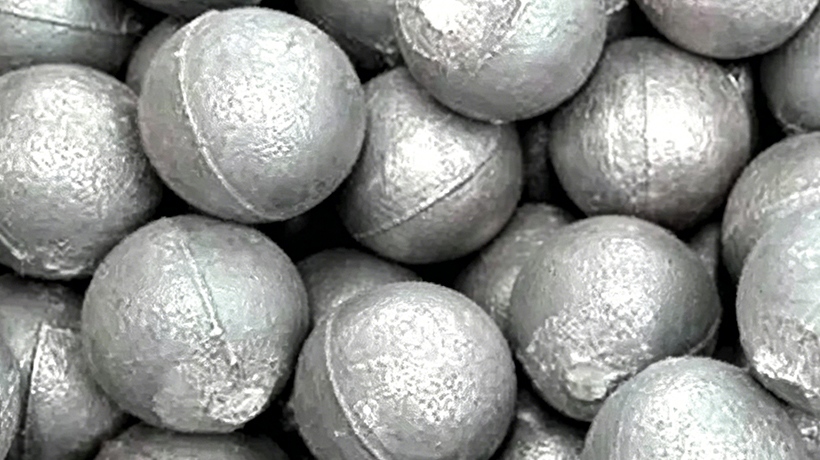
Why Alumina Grinding Media Is Used for High-Purity Grinding
Alumina grinding media is often used when wear resistance and low iron pickup matter.
Compared with steel media, alumina-based ceramic media can help lower iron impurity in the right use case.
It is especially useful in ceramic work and other powder jobs where purity is a key quality need.
But alumina content alone should not guide the buy. Density, hardness, size, wear rate, and the material being processed should also matter.
How Grinding Media Size Affects Milling Performance
Media size has a strong effect on grinding.
Larger media give stronger impact and can help break coarse particles. Smaller media give more contact points and often work better when finer particle sizes are needed.
So the best choice should consider the starting particle size and the final particle size.
| Grinding Requirement | Typical Consideration |
| Coarse material reduction | Larger media |
| Fine particle processing | Smaller media |
| High-purity powder | Low-contamination media |
| Abrasive materials | High wear resistance |
| Sensitive materials | Careful material selection |
These are general rules. The real media size should be set with milling trials and equipment data.
Hardness and Wear Resistance Matter More Than Price
A common buy mistake is to compare only the price per kilogram.
For example, Media A may cost less but wear much faster than Media B.
The real cost should include:
Purchase Cost + Wear Loss + Replacement Labor + Downtime + Product Impurity
If a cheaper media needs frequent changes, the apparent saving can vanish fast.
For continuous production, service life should be checked along with the first price.
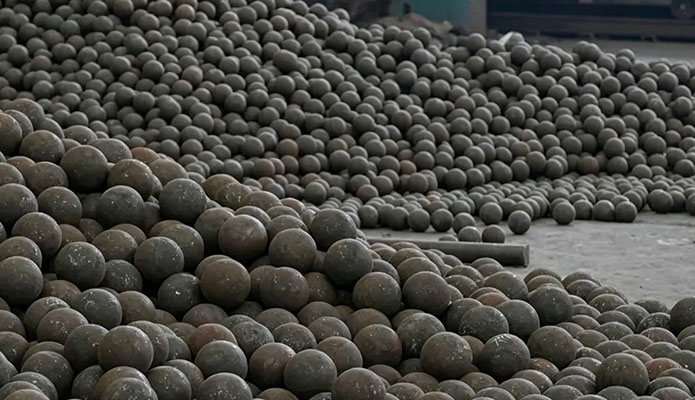
How to Choose Grinding Media for Different Materials
Different materials need different choices.
Ceramic powders often need strong wear resistance and low impurity pickup. Minerals may need higher strength because they are more abrasive. Chemical and pigment jobs may place more weight on purity.
Electronic materials can have very strict purity needs.
There is no single grinding media type that fits every job.
The best choice starts with the material being processed, not with the media itself.
What to Ask Grinding Media Suppliers Before Ordering
Before contacting grinding media suppliers, buyers should gather a few basic process details.
| Item | Why It Matters |
| Material composition | Helps evaluate contamination risk |
| Alumina content | Influences material properties |
| Density | Affects grinding force |
| Media size | Influences milling efficiency |
| Wear rate | Helps estimate replacement cost |
| Feed particle size | Supports size selection |
| Target particle size | Determines grinding requirements |
| Mill type | Affects media compatibility |
A supplier who understands the full milling process can usually give better advice than one who only sends a catalog.
Practical Lessons from Grinding Applications
One good maintenance habit is to check the media often instead of waiting for grinding performance to drop.
Check for:
Surface wear
Abnormal breakage
Size loss
Powder pickup
Changes in milling time
If the media wears much faster than expected, the cause may be material hardness, mill speed, loading conditions, or the wrong media grade.
This kind of check can help find problems before they affect a large batch.
Selecting the right grinding media is not just about picking the hardest or cheapest option.
The processed material, needed particle size, purity limits, media size, wear resistance, and operating conditions should all be checked.
Alumina grinding media can be a good choice for many jobs where wear resistance and low iron pickup matter.
When comparing grinding media suppliers, buyers should look beyond the purchase price and check the full cost of operation.
The best approach is to choose grinding media for the full milling process. The right mix of material, size, and operating conditions can improve grinding stability, cut needless replacement, and help keep product quality steady.
Online Message
RELATED PRODUCTS

LAR’s wear-resistant ceramic rubber is a composite lining material designed to combine the elasticity of rubber with the hardness of ceramic. This wear-resistant ceramic rubber is widely used in mining, power, cement, and bulk material handling systems. Many industries use wear-resistant ceramic rubber to improve impact resistance and wear protection at the same time. LAR’s square ceramic rubber lagging is commonly applied on pulley surfaces. This square ceramic rubber lagging provides strong friction resistance and reduces belt slippage in conveyor systems. Ceramic rubber plate products are used in flat or curved surfaces that require both cushioning and abrasion resistance. LAR’s wear resistant ceramic rubber pad is designed for localized protection in high-impact zones. This wear resistant ceramic rubber pad absorbs vibration while the ceramic surface resists abrasion. Wear resistant ceramic rubber panel is used for large-area lining protection in chutes, hoppers, and transfer points.
LAR’s wear-Resistant Tiles are industrial ceramic linings designed to protect equipment from abrasion and impact. The products include Wear Resistant Ceramic Pipe Tile, Wear Resistant Ceramic Cone Tile, Wear Resistant Ceramic Cyclone Tile, and Wear Resistant Ceramic Dimple Tile. Each type is engineered to match specific equipment shapes and working conditions. LAR’s wear resistant ceramic lining is a key structure used inside chutes, hoppers, cyclones, and pipelines. This wear resistant ceramic lining provides a hard protective surface that reduces material erosion during high-speed flow. Abrasion resistant linings are also used in similar applications where particle impact and sliding wear are severe. Abrasion resistant linings and wear resistant ceramic lining systems are engineered to withstand continuous particle impact. Wear resistant ceramic liner products are commonly used in systems with high flow velocity and abrasive media.The tiles are then sintered at high temperature to form a dense structure. The final product maintains a porosity of about 5–6%, which enhances durability and wear resistance. Many industries use these tiles to extend equipment life and reduce maintenance costs.
LAR produces ceramic wear resistant linings using high-purity alumina ceramics. The material forms a dense and hard structure after sintering. This structure gives the product strong resistance to abrasion and erosion. LAR designs ceramic wear linings for demanding industries such as mining, cement, steel, and power generation. These industries require reliable protection for equipment exposed to bulk materials. The product protects chutes, hoppers, cyclones, and pipelines from continuous wear. LAR supplies a wide range of ceramic wear liners in standard tiles, engineered shapes, and composite panels. The product can adapt to flat, curved, and complex surfaces. LAR also integrates rubber or steel backing into ceramic wear resistant linings to improve impact absorption. This combination enhances durability under mixed wear conditions. The product supports several installation methods, including adhesive bonding and mechanical fixing. LAR ensures that ceramic wear linings reduce maintenance frequency and extend equipment service life.
LAR produces wear resistant ceramic brick with high-purity alumina as the main material. The manufacturing process forms a dense and fine-grained structure. This structure gives the product excellent resistance to abrasion and erosion. LAR designs wear resistant ceramic block systems for industries such as mining, cement, steel, and bulk material handling. These applications involve constant impact and sliding wear. The product protects equipment like chutes, bins, pipes, and mills from rapid damage. LAR also offers wear resistant ceramic cube solutions for modular lining systems. These cubes improve flexibility in installation and help distribute wear more evenly. LAR provides customized sizes and thicknesses of wear resistant ceramic brick to match different equipment shapes. The product can fit both flat and curved surfaces. LAR ensures that wear resistant ceramic block solutions reduce maintenance frequency and extend service life. The product also supports efficient operation by maintaining stable performance under continuous use.
Alumina wear resistant ceramic is a high-performance material designed for severe abrasion and impact conditions. This alumina wear resistant ceramic uses high-purity aluminum oxide to achieve excellent hardness and wear resistance. Many industries select alumina wear resistant ceramic to protect equipment and extend service life. Alumina Wear Plates are one of the most common forms of this material. These Alumina Wear Plates provide a flat and durable surface for areas exposed to continuous material flow. Alumina Lining systems use this material to protect chutes, hoppers, and pipelines from wear damage. Wear Resistant Alumina Ceramic Parts are produced in various shapes to match complex equipment structures. Manufacturers design Wear Resistant Alumina Ceramic Parts to ensure precise fitting and reliable performance. The dense microstructure of alumina wear resistant ceramic reduces material loss and improves operational efficiency. Manufacturers produce Alumina Wear Plates and Alumina Lining components through pressing and high-temperature sintering processes. These processes ensure high density, uniform structure, and consistent quality. Wear Resistant Alumina Ceramic Parts perform well in demanding environments where traditional materials fail quickly.
LAR’s wear-resistant hex mats are modular ceramic lining systems designed for severe abrasion environments. These wear-resistant hex mats are widely used to protect pipelines, chutes, cyclones, and industrial equipment. Many industries select wear-resistant hex mats to improve wear protection efficiency and reduce maintenance frequency. LAR’s wear-resistant alumina ceramic hex mat is one of the most commonly used structures in high-abrasion systems. This wear-resistant alumina ceramic hex mat provides a dense and uniform protective layer with excellent hardness and stability. Wear resistant ceramic mosaic mat is designed with small hexagonal tiles that are pre-mounted on flexible backing materials for easy installation. LAR’s wear resistant ceramic hex mat is also used in complex curved or irregular surfaces where traditional tiles are difficult to install. Manufacturers design wear resistant ceramic hex mat systems to ensure strong adhesion, high coverage efficiency, and long service life.This production method ensures consistent tile alignment and stable bonding strength. Wear-resistant alumina ceramic hex mat and wear resistant ceramic mosaic mat are widely used in heavy-duty industrial applications.
LAR’s wear-resistant ceramic pipes/tubes are high-performance conveying components designed for severe abrasion, corrosion, and high-flow industrial environments. These wear-resistant ceramic pipes/tubes are widely used in mining, power, steel, and chemical industries. Many systems rely on wear-resistant ceramic pipes/tubes to extend pipeline life and reduce maintenance downtime. LAR’s wear resistant ceramic tube products are designed for straight or curved pipeline sections that handle abrasive media. This wear resistant ceramic tube provides a smooth internal surface that reduces friction and material loss during transport. Wear resistant ceramic pipe is commonly used in pneumatic and hydraulic conveying systems where particle erosion is severe. LAR’s weramic tile lined pipe is another common structure used for complex pipeline conditions. This ceramic tile lined pipe uses high-hardness ceramic tiles bonded to a steel pipe body to create strong wear protection. Manufacturers design ceramic tile lined pipe systems to improve durability in high-impact and high-velocity flow environments.This structure ensures strong adhesion and stable long-term performance. Wear resistant ceramic pipe and wear resistant ceramic tube products are widely used in harsh industrial conveying systems.
LAR’s Wear-resistant hex mats are modular ceramic lining systems designed for severe abrasion environments. These wear-resistant hex mats are widely used to protect pipelines, chutes, cyclones, and industrial equipment. Many industries select wear-resistant hex mats to improve wear protection efficiency and reduce maintenance frequency. LAR’s Wear-resistant alumina ceramic hex mat is one of the most commonly used structures in high-abrasion systems. This wear-resistant alumina ceramic hex mat provides a dense and uniform protective layer with excellent hardness and stability. Wear resistant ceramic mosaic mat is designed with small hexagonal tiles that are pre-mounted on flexible backing materials for easy installation. LAR’s Wear resistant ceramic hex mat is also used in complex curved or irregular surfaces where traditional tiles are difficult to install. Manufacturers design wear resistant ceramic hex mat systems to ensure strong adhesion, high coverage efficiency, and long service life.
LAR’s Wear-resistant ceramic rubber is a composite lining material designed to combine the elasticity of rubber with the hardness of ceramic. This wear-resistant ceramic rubber is widely used in mining, power, cement, and bulk material handling systems. Many industries use wear-resistant ceramic rubber to improve impact resistance and wear protection at the same time. LAR’s Square ceramic rubber lagging is commonly applied on pulley surfaces. This square ceramic rubber lagging provides strong friction resistance and reduces belt slippage in conveyor systems. Ceramic rubber plate products are used in flat or curved surfaces that require both cushioning and abrasion resistance. LAR’s Wear resistant ceramic rubber pad is designed for localized protection in high-impact zones. This wear resistant ceramic rubber pad absorbs vibration while the ceramic surface resists abrasion. Wear resistant ceramic rubber panel is used for large-area lining protection in chutes, hoppers, and transfer points. Manufacturers produce each ceramic rubber plate through hot vulcanization or bonding processes. The ceramic tiles are embedded into the rubber matrix to form a stable structure. The ceramic phase maintains a dense structure with a porosity of about 5–6%, which improves wear resistance and durability. Many industries use square ceramic rubber lagging and wear resistant ceramic rubber panels to extend equipment life and reduce maintenance costs.
