
 English
 Русский
 Español
 Français
 Deutsch
 简体中文
简体中文
 Árabe
Árabe
 Português
 日本語
日本語
 한국어
한국어
 हिंदी
हिंदी
 Prancis
 Türkçe
 Tiếng Việt
 Italiano
 ไทย
ไทย

How Refractory Materials Extend Furnace Service Life and Reduce Maintenance Costs
How Refractory Materials Extend Furnace Service Life and Reduce Maintenance Costs
Industrial furnace maintenance rarely starts with a major failure. In many cases, the warning signs appear much earlier: small cracks in the lining, local hot spots, damaged refractory surfaces, or an increasing number of emergency repairs.
For furnace operators, these problems create more than material replacement costs. Every unexpected shutdown can interrupt production, delay orders, increase labor requirements, and place additional stress on equipment.
LAR has worked with customers facing these problems in high-temperature industrial applications. One practical lesson has become clear through these projects: refractory life depends on how well the material matches the actual working conditions, not simply on its rated temperature.
When Frequent Repairs Become a Production Problem
One customer operating a high-temperature furnace contacted LAR after experiencing repeated lining repairs.
The furnace itself was still operating, but maintenance teams had to repair damaged areas several times during the production cycle. The customer was replacing refractory sections before reaching their expected service life.
The main complaints were straightforward:
Frequent furnace shutdowns
Rapid lining wear
Increasing maintenance labor
Unplanned production delays
Higher refractory consumption
The initial assumption was that the refractory material was simply not strong enough.
After reviewing the application, the situation was more complicated.
The damaged areas were concentrated around locations exposed to mechanical impact and repeated temperature changes. The furnace lining was also exposed to material movement during operation. In other words, the problem was not only temperature. The lining was dealing with thermal shock, abrasion, and mechanical stress at the same time.
This distinction changed the material selection approach.
Why Refractory Failure Is Not Always Caused by High Temperature
A common mistake is to select refractory materials mainly according to maximum service temperature.
Temperature is important, but it is only one part of the working environment.
Before recommending a replacement material, experienced engineers normally look at several conditions:
Operating temperature and temperature fluctuations
Heating and cooling frequency
Mechanical impact
Abrasive material movement
Furnace atmosphere
Chemical exposure
Load and structural pressure
Expected maintenance interval
Two areas inside the same furnace can operate at similar temperatures but require completely different refractory solutions.
For example, a relatively stable furnace wall may primarily need resistance to heat and chemical attack. A material transfer area may instead require high resistance to abrasion and impact.
Using the same refractory material throughout the furnace is therefore not always the most economical approach.
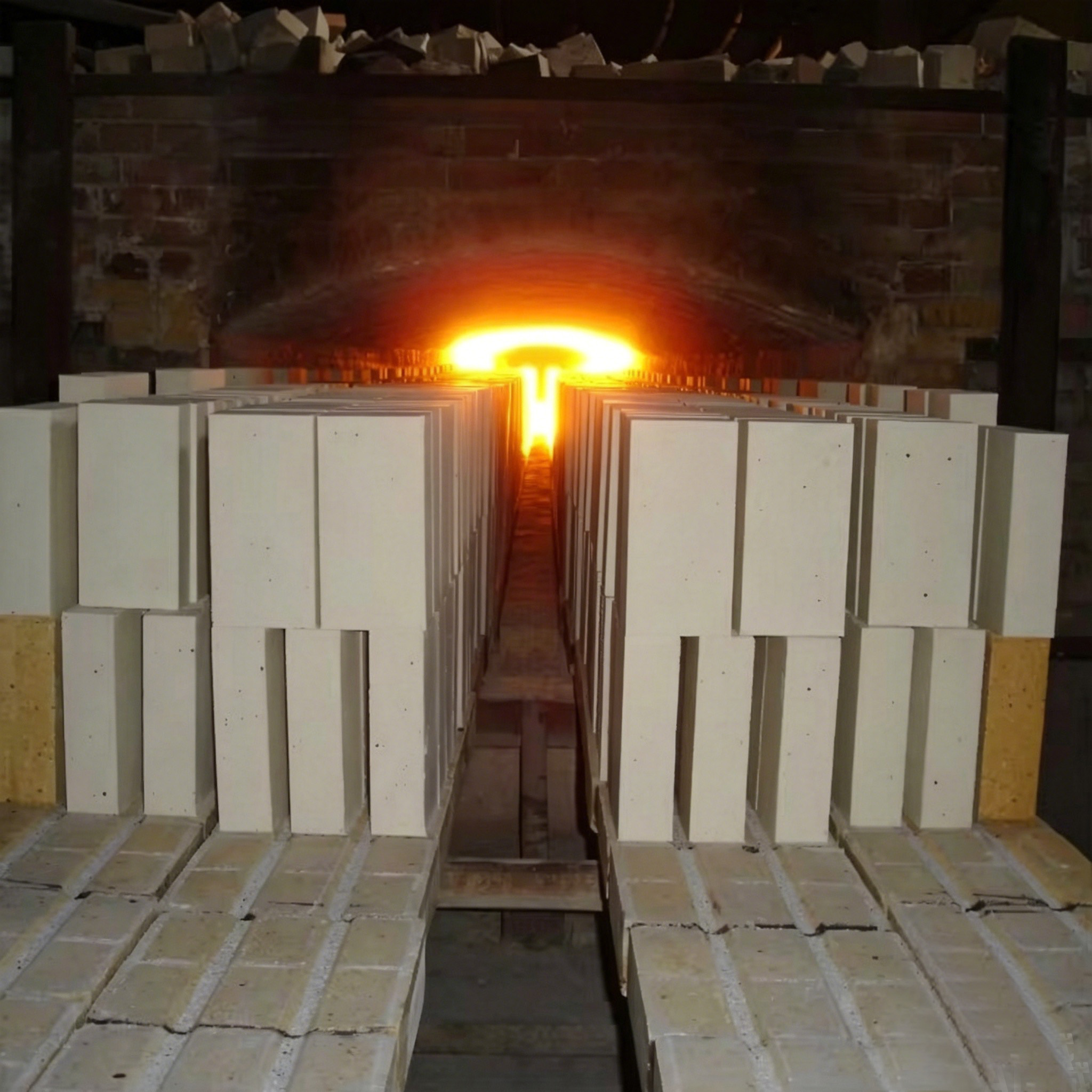
Case Experience: Reducing Lining Wear in a High-Abrasion Area
In one application, the customer found that a particular section of the furnace lining was wearing much faster than the surrounding areas.
The damaged surface showed clear signs of mechanical wear rather than simple thermal degradation.
Instead of replacing the entire lining with a higher-grade material, LAR focused on the specific wear zone.
The engineering assessment considered:
Where the material was contacting the lining.
How frequently the contact occurred.
Whether particles were sliding or impacting the surface.
How much thermal cycling the area experienced.
Whether the existing lining thickness was appropriate.
For the high-wear section, Wear Resistant Ceramic was considered as part of the protection strategy.
The purpose was not to replace every refractory component with ceramic. It was to use a more wear-resistant material where abrasion was actually causing the premature failure.
This approach reduced unnecessary material changes and concentrated the investment on the areas that were causing the highest maintenance cost.
The customer's maintenance supervisor later commented:
“We were replacing the lining based on the damage we could see. After looking at the wear pattern, we realized that only certain areas were causing most of the maintenance work.”
That observation is important. A good refractory maintenance strategy starts with identifying where the failure begins, rather than simply replacing everything that looks old.
Where SiC Products Can Make a Difference
Some furnace areas face a combination of high temperature, thermal cycling, and mechanical stress.
In these conditions, SiC Products can provide useful performance advantages because silicon carbide has high hardness, good thermal conductivity, and strong resistance to thermal shock.
LAR has encountered applications where conventional refractory components deteriorated rapidly because of repeated temperature changes.
The practical solution was not simply to increase material thickness. Excessive thickness can reduce useful furnace space and may create additional thermal stresses.
Instead, engineers examined the actual failure mechanism and considered SiC-based components for the areas where thermal shock and structural durability were particularly important.
This type of material selection can be especially useful for furnace components exposed to repeated heating and cooling.
Refractory Bricks: The Importance of Matching the Lining to the Working Zone
Refractory Bricks remain an important choice for many industrial furnace linings, but the correct grade depends heavily on the application.
A lining exposed to chemical attack may require different characteristics from one exposed primarily to mechanical wear.
When selecting refractory bricks, LAR typically considers:
Temperature range
Chemical environment
Mechanical loading
Thermal cycling
Abrasion level
Required service life
For example, high-alumina refractory bricks may be appropriate for certain high-temperature applications where good refractoriness and chemical stability are required. Other furnace zones may require different refractory compositions because of the atmosphere or mechanical conditions.
The key point is that a refractory brick should be selected for the job it actually performs inside the furnace.
Another Customer Lesson: Do Not Wait for a Major Failure
A second customer had a different problem.
The furnace was still producing normally, but operators noticed several small hot spots on the outer surface. Because production had not yet been affected, the customer initially planned to continue operating until the next scheduled shutdown.
LAR recommended inspecting the corresponding internal lining areas before waiting for a major failure.
The inspection found localized deterioration behind the hot spots.
The customer repaired the affected sections during a planned maintenance period rather than waiting for a larger lining failure.
This prevented an unplanned shutdown and allowed the customer to combine the repair with other scheduled maintenance work.
The customer's production manager said:
“The early inspection saved us from turning a small repair into an emergency shutdown.”
This is one of the simplest ways to reduce furnace maintenance costs: identify localized deterioration before it becomes a production problem.
Three Practical Signs That a Furnace Lining Needs Attention
Operators do not always need sophisticated equipment to identify early warning signs.
1. Increasing External Surface Temperature
If an area of the furnace shell becomes noticeably hotter than before, the insulation or refractory structure behind that area may have deteriorated.
The change is more important than the absolute temperature. A gradual increase in the same location deserves investigation.
2. Repeated Local Repairs
If the same section requires repair again and again, replacing the damaged material with the same solution may not solve the underlying problem.
The cause may be abrasion, thermal expansion, structural movement, or unsuitable material selection.
3. Shortening Maintenance Intervals
When a furnace that previously operated for months between repairs begins requiring maintenance much sooner, the change should be treated as a performance signal.
Tracking repair locations and intervals can reveal patterns that are difficult to see from individual maintenance events.
How to Reduce the Total Cost of Refractory Maintenance
Lower refractory cost does not necessarily mean purchasing cheaper material.
For industrial furnace operators, the more useful calculation is the total cost of ownership.
This includes:
Material replacement
Installation labor
Furnace downtime
Lost production
Emergency maintenance
Energy losses caused by deteriorated lining
A more durable refractory solution may have a higher initial material cost but still reduce total operating costs if it extends the maintenance interval.
For this reason, LAR recommends evaluating refractory performance based on service life and operating conditions, rather than purchase price alone.
A More Practical Way to Plan Refractory Replacement
Based on field experience, a useful maintenance approach is to divide the furnace into different working zones.
For each zone, record:
| Furnace Area | Main Stress | Typical Concern | Evaluation Focus |
|---|---|---|---|
| Furnace wall | Thermal exposure | Lining deterioration | Temperature and chemical conditions |
| Material impact zone | Mechanical impact | Surface wear | Wear resistance |
| High-cycle area | Thermal cycling | Cracking | Thermal shock resistance |
| Structural section | Load and heat | Deformation | Strength and dimensional stability |
This simple record can make future refractory decisions much more accurate.
Instead of asking, “Which refractory material has the highest temperature rating?”, the maintenance team can ask a more useful question:
“What is actually damaging this part of the furnace?”
That question usually leads to a better solution.
LAR's Approach to Refractory Material Selection
LAR supplies Refractory Bricks, Wear Resistant Ceramic, SiC Products, and other refractory materials for high-temperature industrial applications.
However, material supply is only one part of the work.
For a refractory solution to perform properly, the material needs to match the furnace's actual operating conditions. LAR therefore focuses on understanding the application, identifying the main failure mechanism, and selecting materials according to the specific working zone.
This approach can help customers avoid unnecessary replacement, reduce repeated repairs, and make better use of their maintenance budget.
Frequent furnace repairs are often treated as an unavoidable part of high-temperature production. In practice, many recurring failures can be reduced when the actual cause of refractory damage is properly identified.
Refractory Bricks can provide reliable lining protection in suitable furnace zones. Wear Resistant Ceramic can address localized abrasion. SiC Products can be valuable where thermal shock, heat transfer, and mechanical durability are important.
The most effective solution is not necessarily the most expensive material. It is the material and structure that fit the actual conditions.
For furnace operators, the objective should be simple: longer service intervals, fewer emergency repairs, and more predictable production.
That is where careful refractory selection can create measurable value.
Online Message
RELATED PRODUCTS

LAR's Oxide-bonded SiC products are refractory components made from silicon carbide grains bonded with oxide phases. These oxide-bonded SiC products offer a balance between cost and performance. Many industries select oxide bonded silicon carbide materials for high-temperature structural applications. Manufacturers produce oxide-bonded SiC products by mixing silicon carbide with oxide binders such as silica or alumina. The process forms a strong ceramic matrix after high-temperature firing. The structure allows oxide bonded silicon carbide components to maintain stability under thermal load. LAR's Oxide-bonded SiC products show good oxidation resistance and moderate thermal conductivity. These oxide bonded silicon carbide materials perform well in oxidizing kiln atmospheres. Many users choose oxide-bonded SiC products for kiln furniture and heat-resistant supports. Industries such as ceramics and metallurgy widely use oxide bonded silicon carbide components. These oxide-bonded SiC products support stable firing conditions and improve production efficiency.
LAR's SiC radiant tubes are high-temperature heat transfer components used in indirect heating furnaces. These tubes transfer heat through radiation while separating the heating source from the furnace atmosphere. Manufacturers produce silicon carbide radiant tubes using high-purity SiC materials and advanced sintering processes. Each silicon carbide ceramic radiant tubes product provides excellent thermal conductivity and structural stability. LAR's SiC radiant tubes are widely used in industrial furnaces where clean and uniform heating is required. Silicon carbide radiant tubes help improve temperature control and energy efficiency.
LAR produces ceramic wear resistant linings using high-purity alumina ceramics. The material forms a dense and hard structure after sintering. This structure gives the product strong resistance to abrasion and erosion. LAR designs ceramic wear linings for demanding industries such as mining, cement, steel, and power generation. These industries require reliable protection for equipment exposed to bulk materials. The product protects chutes, hoppers, cyclones, and pipelines from continuous wear. LAR supplies a wide range of ceramic wear liners in standard tiles, engineered shapes, and composite panels. The product can adapt to flat, curved, and complex surfaces. LAR also integrates rubber or steel backing into ceramic wear resistant linings to improve impact absorption. This combination enhances durability under mixed wear conditions. The product supports several installation methods, including adhesive bonding and mechanical fixing. LAR ensures that ceramic wear linings reduce maintenance frequency and extend equipment service life.
LAR produces wear resistant ceramic brick with high-purity alumina as the main material. The manufacturing process forms a dense and fine-grained structure. This structure gives the product excellent resistance to abrasion and erosion. LAR designs wear resistant ceramic block systems for industries such as mining, cement, steel, and bulk material handling. These applications involve constant impact and sliding wear. The product protects equipment like chutes, bins, pipes, and mills from rapid damage. LAR also offers wear resistant ceramic cube solutions for modular lining systems. These cubes improve flexibility in installation and help distribute wear more evenly. LAR provides customized sizes and thicknesses of wear resistant ceramic brick to match different equipment shapes. The product can fit both flat and curved surfaces. LAR ensures that wear resistant ceramic block solutions reduce maintenance frequency and extend service life. The product also supports efficient operation by maintaining stable performance under continuous use.
LAR’s wear-resistant hex mats are modular ceramic lining systems designed for severe abrasion environments. These wear-resistant hex mats are widely used to protect pipelines, chutes, cyclones, and industrial equipment. Many industries select wear-resistant hex mats to improve wear protection efficiency and reduce maintenance frequency. LAR’s wear-resistant alumina ceramic hex mat is one of the most commonly used structures in high-abrasion systems. This wear-resistant alumina ceramic hex mat provides a dense and uniform protective layer with excellent hardness and stability. Wear resistant ceramic mosaic mat is designed with small hexagonal tiles that are pre-mounted on flexible backing materials for easy installation. LAR’s wear resistant ceramic hex mat is also used in complex curved or irregular surfaces where traditional tiles are difficult to install. Manufacturers design wear resistant ceramic hex mat systems to ensure strong adhesion, high coverage efficiency, and long service life.This production method ensures consistent tile alignment and stable bonding strength. Wear-resistant alumina ceramic hex mat and wear resistant ceramic mosaic mat are widely used in heavy-duty industrial applications.
