
 English
 Русский
 Español
 Français
 Deutsch
 简体中文
 Árabe
 Português
 日本語
 한국어
 हिंदी
 Prancis
 Türkçe
 Tiếng Việt
 Italiano
 ไทย

Refractory Precast Blocks vs. Castable Refractory: Key Differences
Refractory Precast Blocks vs. Castable Refractory: Key Differences
Industrial furnaces, kilns, boilers, and other high-temperature equipment need refractory linings that can withstand heat, chemical attack, and mechanical stress. When building or repairing these linings, two common options are refractory precast blocks and castable refractory installed on site.
Both use refractory materials, but they differ in how they are made, installed, and checked before use. The right choice depends on the lining design, site conditions, component shape, installation schedule, and operating environment.
This guide explains the key differences between refractory precast blocks and castable refractory to help industrial buyers and engineers choose a suitable solution.
What Are Refractory Precast Blocks?
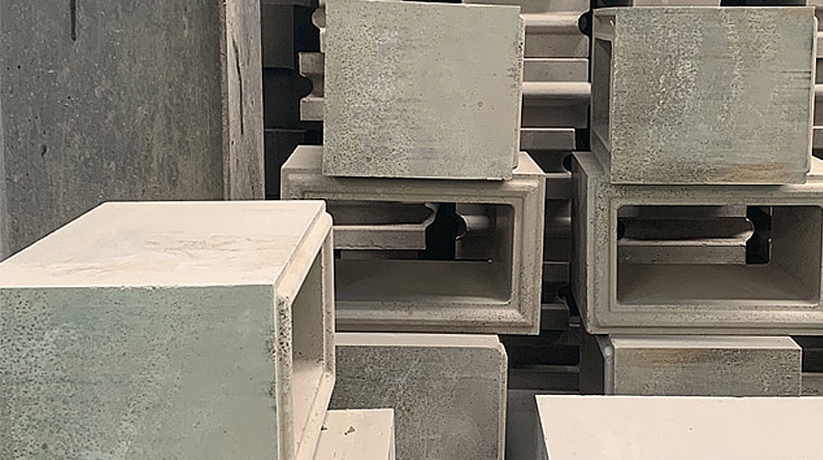
Refractory precast blocks are shaped refractory components produced before they arrive at the installation site. They are commonly made by placing a suitable refractory castable into a mold, followed by controlled curing, drying, and other processing steps required by the material and product design.
These components can be made in standard or custom shapes. Examples include burner blocks, furnace sections, access openings, and other shaped lining parts.
The main advantage is that much of the forming work takes place before installation. Manufacturers can control mold dimensions and production procedures, while buyers can inspect the components before they are installed.
However, dimensional accuracy and final performance still depend on the refractory formulation, mold design, curing and drying procedures, handling, and installation conditions. ASTM C860 and ASTM C862 provide standardized methods for assessing castable consistency and preparing castable specimens, respectively. These standards help explain why material preparation and controlled processing matter, although they do not by themselves guarantee the quality of every commercial precast component. [1][2]
What Is Castable Refractory?
Castable refractory is an unshaped refractory material supplied for mixing and installation. Depending on the product, it may contain refractory aggregates, fine powders, binders, and additives. The material is prepared according to its technical instructions and then placed into a formwork or onto a prepared surface.
After placement, the material must undergo the specified curing and drying process before the lining is exposed to operating temperatures.
Castable refractory is useful when the lining needs to follow a large surface, an irregular shape, or a structure that is easier to form directly on site. It can also be used to repair damaged sections of an existing lining.
Installation quality depends on several factors:
Correct material selection for the operating temperature and chemical environment.
Accurate liquid addition and mixing.
Suitable formwork and placement methods.
Proper curing and controlled drying.
Compliance with the material manufacturer's installation instructions.
ASTM C860 addresses consistency testing for refractory castables, while ASTM C862 covers preparation of castable specimens by casting. These references provide useful background on controlling material preparation and evaluating castable behavior. [1][2]
Refractory Precast Blocks vs. Castable Refractory: Key Differences
The main difference is where the refractory component is formed and how much work must be completed at the installation site.
| Comparison factor | Refractory precast blocks | Castable refractory installed on site |
|---|---|---|
| Manufacturing | Formed before delivery using molds | Mixed and placed at the job site |
| Shape | Suitable for repeatable or custom-shaped components | Suitable for large areas and shapes formed in place |
| Site work | Mainly handling, positioning, joining, and securing | May require mixing, formwork, placement, curing, and drying |
| Quality checks | Components can be inspected before shipment | Quality depends strongly on site preparation and installation controls |
| Transport | Requires suitable packaging and handling for finished components | Dry material can often be transported in bags or bulk packaging |
| Installation planning | Requires accurate dimensions, lifting plans, and joint design | Requires access, formwork, mixing equipment, and sufficient curing and drying time |
| Repair approach | Damaged components may need replacement or a designed repair | Local repairs may be possible using a suitable castable |
| Best fit | Shaped components and repeatable lining sections | Large, continuous, irregular, or site-formed lining areas |
Neither method is always better. A precast design can reduce some on-site forming work, but it introduces requirements for transport, lifting, joint fitting, and dimensional coordination. Castable installed on site can adapt to the structure, but its performance depends on proper installation and drying.
When Should You Choose Refractory Precast Blocks?
Precast blocks may be a good option when the lining includes complex shapes, repeated components, or areas where on-site formwork would be difficult.
Complex component shapes
Burner openings, shaped channels, and other special sections may need precise geometry. A dedicated mold can help produce repeatable shapes, provided the mold and manufacturing process are properly controlled.
Reduced on-site forming work
Because the components arrive already shaped, the installation team may spend less time building formwork and forming individual parts. The total schedule still depends on manufacturing lead time, transport, installation, joint treatment, and any required drying or heating procedures.
Better planning for replacement
A replaceable precast component can simplify future maintenance when its dimensions, access route, and fixing method have been considered during the original design.
Precast burner blocks
Precast burner blocks are used around burner openings and other designed furnace interfaces. Their geometry must match the burner arrangement, lining thickness, surrounding refractory, and required clearances.
The material must also suit the local temperature, thermal cycling, gas flow, and chemical exposure. A precast burner block should therefore be designed for the actual furnace conditions rather than selected by shape alone.
When Is Castable Refractory Installed on Site the Better Choice?
Site-installed castable can be more suitable when the lining covers a large continuous area or needs to follow an irregular structure.
Large lining areas
Castable can be placed across a prepared area without transporting a separate finished block for every section. The design must still account for formwork, anchoring where required, construction joints, and drying.
Irregular surfaces
Some furnace geometries are difficult or expensive to divide into transportable precast parts. Site installation may allow the material to follow the required shape more directly.
Local repairs
A compatible repair castable may be used to restore damaged lining areas. The existing refractory, repair depth, operating conditions, and required bonding method must be assessed before choosing the repair material.
Limited access for large components
If the installation area cannot accommodate the transport or lifting of a large precast block, site-installed castable may be more practical. The decision should also consider the availability of mixing equipment and qualified installation workers.
Common Problems and How to Reduce Them
Both precast blocks and site-installed castables can fail if material selection, processing, installation, or operating conditions are not properly controlled.
Cracking during service: Cracking can be related to thermal gradients, thermal cycling, restraint, material properties, or installation defects. Select a material suitable for the operating conditions and review the component design and expansion provisions.
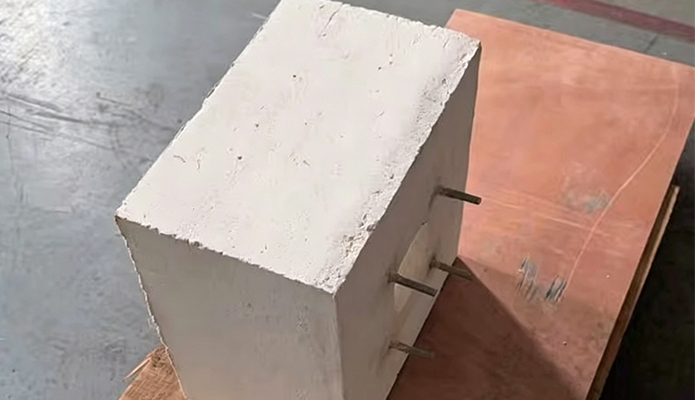
Damage during handling: Precast blocks may crack or chip during lifting, transport, or installation. Use suitable packaging, lifting points, and handling procedures. Inspect components before installation.
Poor joint fit: Incorrect dimensions or inadequate joint planning can create gaps and installation problems. Confirm component dimensions, joint details, and the surrounding lining design before production.
Drying-related damage: Castable refractory contains moisture after installation. Heating too quickly can create damaging internal steam pressure and thermal gradients. Follow the manufacturer's specified curing and dry-out procedure. ASTM C401 provides classification information for castable refractories, but product-specific instructions are still essential for safe installation and heating. [3]
Unsuitable material selection: A refractory that performs well in one furnace may not suit another. Review temperature, atmosphere, abrasion, chemical exposure, and thermal cycling before specifying the material.
How to Select the Right Refractory Precast Block or Castable
Before ordering refractory precast blocks or castable refractory, review the following points:
Operating conditions: Confirm temperature, atmosphere, chemical exposure, abrasion, and thermal cycling.
Component geometry: Determine whether the design requires a shaped block or a lining formed on site.
Material properties: Review the technical data for the proposed refractory grade and confirm that it suits the application.
Installation method: Consider formwork, lifting equipment, access, anchoring, and joint design.
Manufacturing and delivery: For precast blocks, confirm drawings, dimensions, tolerances, packaging, and delivery schedule.
Curing and drying: Confirm the required procedure for the selected material and installation method.
Maintenance plan: Consider how damaged sections will be accessed, repaired, or replaced.
For custom precast blocks, provide drawings or dimensional sketches, the installation location, operating conditions, and any requirements for burner openings or fixing details. This information helps the supplier assess the component design before production.
Choosing the Right Solution for Your Furnace
Refractory precast blocks and site-installed castable refractory serve related purposes, but they solve different installation challenges. Precast blocks are often suitable for shaped components, repeatable designs, and areas where reducing on-site forming work is useful. Castable refractory installed on site can be more practical for large continuous linings, irregular surfaces, and certain repair jobs.
The best option depends on the furnace design, operating environment, installation resources, and maintenance requirements. Comparing these factors before ordering can help avoid fit-up problems and select a refractory solution that suits the job.
LAR Refractory supplies refractory materials and shaped refractory components for industrial applications. Contact the team to discuss your component drawings, operating conditions, and material requirements.
References
[1] ASTM International. ASTM C860: Standard Test Method for Determining the Consistency of Refractory Castable Using the Ball-In-Hand Test.
[2] ASTM International. ASTM C862: Standard Practice for Preparing Refractory Concrete Specimens by Casting.
[3] ASTM International. ASTM C401: Standard Classification of Castable Refractories.
Online Message
RELATED PRODUCTS

LAR’s precast blocks are engineered refractory components designed for high-temperature industrial applications. These precast blocks are manufactured in controlled conditions to achieve stable quality and precise dimensions. Many industries use precast blocks to simplify installation and improve the reliability of thermal systems. A refractory precast block is produced using selected aggregates, high-temperature binders, and optimized formulations. This refractory precast block structure provides strong resistance to heat, thermal shock, and chemical attack. Manufacturers design precast blocks to perform reliably under continuous thermal load. LAR’s precast burner blocks are a specialized type of precast blocks used in combustion zones. These precast burner blocks support burners and help maintain stable flame distribution. Manufacturers ensure that each refractory precast block meets strict performance and dimensional requirements. LAR’s precast blocks perform well in complex furnace structures where traditional brick installation is difficult. Many users select precast burner blocks and standard precast blocks to reduce installation time and improve operational efficiency.
LAR’s burner block precast parts are high-temperature refractory components designed for industrial combustion systems. These burner block precast parts are used to support and protect burners in furnaces, kilns, and thermal processing equipment. Many industries rely on burner block precast parts to ensure stable flame control and efficient heat distribution. LAR’s burner block precast parts are manufactured using high-quality refractory aggregates and binders. The material structure provides excellent resistance to thermal shock, erosion, and chemical attack. A professional burner block precast parts supplier ensures that each product maintains precise dimensions and consistent performance. Manufacturers produce burner block precast parts through casting and controlled curing processes. The production method creates a dense and durable structure that withstands high-temperature operation. Many users select a reliable burner block precast parts supplier to achieve long service life and reduced maintenance. LAR’s burner block precast parts perform well in harsh combustion environments where temperature fluctuations and flame impact are common. These components play a critical role in maintaining burner efficiency and system safety.
LAR’s electric Furnace Cover Precast Parts are high-performance refractory components designed for electric arc furnaces (EAF). The products are also known as Electric Arc Furnace Roof Prefabricated Parts. They are made from high-quality refractory materials to withstand extreme temperatures and chemical corrosion in steelmaking processes. LAR’s electric Furnace Cover Precast Parts are designed for furnace roof and cover systems in high-temperature industrial equipment. These precast shapes improve installation efficiency and reduce on-site refractory construction time.High alumina-based materials provide strong structural stability and good resistance to thermal shock. The precast parts maintain integrity during repeated heating and cooling cycles in electric furnace operation.Mullite and low cement castable systems help improve thermal insulation and reduce heat loss from the furnace cover. These materials also support stable performance under long-term high-temperature conditions. Manufacturers produce each Electric Furnace Cover using advanced casting and curing techniques. The final precast parts have a dense structure with a porosity of about 5–6%, ensuring strength and long service life. Many steel plants choose these prefabricated parts to improve furnace safety and operational efficiency.
LAR’s burner Blocks are essential refractory components used in industrial combustion systems. These Burner Blocks provide stable support and protection for burners in furnaces, kilns, and thermal processing equipment. Many industries depend on Burner Blocks to maintain efficient combustion and uniform heat distribution. A refractory burner block is manufactured from high-quality refractory aggregates and binders. This refractory burner block structure offers strong resistance to high temperature, flame impact, and chemical corrosion. Manufacturers design Burner Blocks to ensure stable operation under continuous thermal load. Customized Burner Block solutions allow users to match specific burner designs and furnace configurations. A Customized Burner Block can be produced with precise shapes, openings, and mounting features. Manufacturers ensure that each refractory burner block meets strict dimensional and performance requirements. LAR’s burner Blocks perform reliably in harsh environments where temperature fluctuations and mechanical stress are common. Many users choose Customized Burner Block designs to improve installation accuracy and extend service life.
LAR’s refractory Anchor Blocks are critical components used to secure refractory linings in high-temperature furnaces. These products, also known as Precast Anchor Block or Refractory Anchor Brick, provide stable support for bricks and precast sections in steelmaking and metallurgical applications. Cast Anchor Components are designed for reliable performance under thermal stress and mechanical load. LAR’s anchor Blocks provide structural fixing support for refractory linings in high-temperature industrial equipment. The products help secure castables, fibers, and precast linings to furnace shells.Precast Anchor Blocks are manufactured in controlled shapes to improve installation efficiency. These components reduce on-site forming work and ensure more stable lining positioning. LAR’s refractory Anchor Bricks offer good mechanical strength and thermal stability. The design helps maintain lining integrity during repeated heating and cooling cycles.Cast Anchor Components are used for customized furnace structures with complex geometry. These parts improve bonding performance between refractory layers and steel shells.Anchor systems are widely used in industrial furnaces, boilers, kiln linings, and petrochemical heating equipment. The products help extend lining life and improve operational safety.
LAR’s precast Refractory Shapes are factory-formed refractory components designed for high-temperature industrial applications. These Precast Refractory Shapes are widely used in furnaces, kilns, burners, and thermal processing systems. Many industries select Precast Refractory Shapes to improve installation efficiency and reduce on-site construction time. LAR’s precast Shapes are produced under controlled casting conditions before installation. This approach ensures stable density, accurate dimensions, and consistent performance. Custom Refractory Cast Shapes are designed to match specific furnace structures and operating environments. LAR’s special Shaped Refractory Parts are used in complex areas where standard bricks cannot fit. These Special Shaped Refractory Parts improve sealing performance and thermal stability in critical zones. Precast Refractory Shapes can be manufactured in various geometries based on engineering drawings. Manufacturers use vibration casting, molding, and high-temperature curing processes to produce Precast Refractory Shapes. These methods ensure uniform internal structure and reliable mechanical strength. A professional supplier of Precast Shapes ensures strict quality control from raw materials to final curing.
