
 English
 Русский
 Español
 Français
 Deutsch
 简体中文
 Árabe
 Português
 日本語
 한국어
 हिंदी
 Prancis
 Türkçe
 Tiếng Việt
 Italiano
 ไทย

Silicon Carbide Heating Rods for Industrial High-Temperature Furnaces
Silicon Carbide Heating Rods for Industrial High-Temperature Furnaces
Industrial furnaces need reliable heating elements to maintain the required temperature during production. Ceramic firing, glass processing, and heat treatment all depend on stable heat. If a heating element fails or produces uneven heat, it can affect product quality and increase maintenance time.
Silicon carbide heating rods are used in many high-temperature electric furnaces. They offer good heat resistance and can operate in demanding conditions when the element, power supply, and furnace design are properly matched.
Why Silicon Carbide Heating Rods Are Used in Industrial Furnaces
Silicon carbide heating rods generate heat when electric current passes through the heating section. They can reach high temperatures and are used in furnaces that need electric heating.
Common applications include:
Ceramic kilns: Heating ceramic products during firing.
Glass processing: Providing heat for suitable glass production and testing processes.
Laboratory furnaces: Supporting controlled heating for research and material testing.
Heat treatment: Heating materials for selected industrial processes.
Electronic materials production: Providing heat for processes that require controlled furnace temperatures.
The right heating element depends on the required temperature, furnace atmosphere, heating cycle, and available electrical power. The furnace design and the arrangement of the rods also affect heating performance.
How a Silicon Carbide SiC Rod Heater Works
A silicon carbide SiC rod heater converts electrical energy into heat through electrical resistance. When current passes through its heating section, the rod produces heat and raises the furnace temperature.
Many designs have a central heating section and two colder terminal sections. The heating section sits inside the furnace, while the terminal sections connect to the power supply.
Several factors affect operation:
Rod dimensions: Diameter and heating length affect electrical resistance and heat output.
Power supply: Voltage and current must match the element specifications.
Installation: Correct spacing and support help reduce mechanical stress.
Furnace atmosphere: Gas composition and operating conditions can affect element performance.
Operating cycle: Frequent starts, stops, and temperature changes can affect service life.
Silicon carbide elements may change resistance during use. The power control method should account for this change. Always follow the manufacturer's electrical and installation instructions.
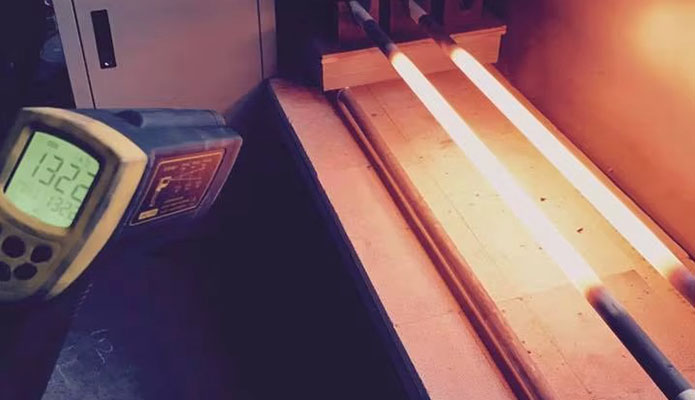
Silicon Carbide Heating Rods vs. Other Heating Elements
Silicon carbide is not the only option for high-temperature electric heating. Molybdenum disilicide (MoSi₂) elements are also used in industrial and laboratory furnaces.
| Heating element | Main characteristics | Common applications | Key consideration |
|---|---|---|---|
| Silicon carbide (SiC) | High-temperature electric heating and good thermal conductivity | Ceramic kilns and industrial furnaces | Resistance may change during use |
| Molybdenum disilicide (MoSi₂) | Used in furnaces that require very high operating temperatures | Advanced ceramics and laboratory furnaces | Check atmosphere and element design |
| Metallic resistance elements | Suitable for many lower-temperature heating applications | Drying ovens and heat treatment equipment | Confirm the element's temperature rating |
Actual performance depends on the specific grade, element design, furnace atmosphere, and operating conditions. These heating elements are not direct replacements for one another in every furnace.
Before changing element types, compare the rated temperature, electrical requirements, installation dimensions, and expected maintenance needs.
Common Problems That Affect SiC Heating Rod Performance
Even a suitable silicon carbide heating rod can fail early if installation or operating conditions are unsuitable.
Resistance changes: SiC elements can increase in resistance during service. If the power supply cannot provide the required output, the furnace may struggle to maintain its target temperature. Check resistance and electrical settings according to the manufacturer's instructions.
Local overheating: Poor spacing, uneven loading, or incorrect control settings can create uneven heat. Review the element layout and furnace temperature distribution.
Broken rods: Mechanical impact, poor support, or excessive stress during installation can damage the element. Handle rods carefully and use the specified mounting method.
Terminal problems: Loose or unsuitable electrical connections can cause poor contact and local heating. Check connections and terminal components during scheduled maintenance.
Regular inspection and correct electrical control can help identify problems before they cause an unexpected shutdown.
Application Case: Replacing Silicon Carbide Heating Rods in a Ceramic Kiln
A ceramic manufacturer uses an electric kiln to fire ceramic products. After repeated heating cycles, some silicon carbide heating rods show changes in resistance. The kiln may also take longer to reach the target temperature.
These problems can affect production schedules and make temperature control more difficult.
The Main Problems
The maintenance team needs to check several possible causes:
Changes in heating rod resistance after long-term use
Uneven temperature distribution inside the kiln
Loose or damaged electrical connections
Incorrect rod spacing or unsuitable support
Power settings that do not match the current element condition
Replacing the rods without checking these factors may not solve the problem.
The Practical Solution
The manufacturer and maintenance team should first review the existing rod specifications, resistance measurements, furnace temperature, and electrical supply.
If the rods have reached the end of their service life, suitable replacement elements can be selected according to the furnace design. The team should also check terminal connections, mounting positions, and the condition of the power control equipment.
After installation, the furnace should be tested under the recommended operating conditions. Temperature distribution and element performance should be monitored during normal production.
Operating Experience
This case shows why selecting a silicon carbide heating rod involves more than matching its length and diameter. Electrical resistance, heating zone dimensions, installation, and furnace control all affect performance.
For a ceramic kiln, the right replacement rod should match the original specifications or an approved updated design. A review of the full heating arrangement can also help identify problems that may shorten element life.
Note: This is an illustrative application case based on common operating issues. It does not describe a verified customer project or measured performance results.
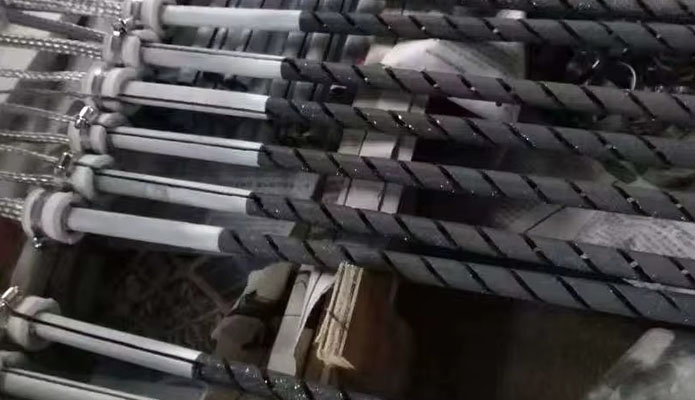
What to Check When Choosing a Silicon Carbide Heating Rod Factory
A reliable silicon carbide heating rod factory should understand the furnace's operating conditions and electrical requirements. Product selection should be based on technical details, not price alone.
Before placing an order, confirm:
Rod type and overall dimensions
Heating section and terminal lengths
Rated resistance and allowable electrical conditions
Recommended operating temperature
Furnace atmosphere and installation method
Product inspection and technical support
The factory should provide specifications for the actual model. Buyers should also ask how the manufacturer checks dimensions, resistance, surface condition, and product consistency.
For replacement orders, the existing rod model, dimensions, resistance measurements, and furnace details can help the supplier identify a suitable replacement. Do not select a rod based only on its appearance or overall length.
Custom Silicon Carbide Heating Rods for Different Furnace Applications
Different furnaces may require different rod shapes, dimensions, and electrical ratings. A standard element may not fit an existing furnace or meet its heating requirements.
Custom silicon carbide heating rods can be specified according to the furnace layout and required electrical conditions. The design should consider the heating zone, cold ends, terminal connections, mounting space, and power supply.
Before production, provide the furnace model, operating temperature, electrical details, installation drawings, and current element specifications when available. This information helps the manufacturer assess the required design.
The right silicon carbide heating rod combines suitable dimensions, compatible electrical properties, correct installation, and proper temperature control. Working with an experienced manufacturer helps match the element to the furnace and supports stable operation.
Online Message
RELATED PRODUCTS

LAR’s Equal-diameter silicon carbide rod is a widely used electric heating element for industrial furnaces. This equal-diameter silicon carbide rod delivers stable heat output under high-temperature conditions. Many industries choose equal-diameter silicon carbide rod products for their reliability and long operating life. Manufacturers produce equal-diameter silicon carbide rod products from high-purity silicon carbide materials. The process includes forming, high-temperature recrystallization, and surface treatment. An experienced ed-type silicon carbide rod supplier controls each production step to ensure uniform resistance and consistent quality. LAR’s Ed-type silicon carbide rod refers to a straight rod with the same diameter across the entire length. This structure allows even heat distribution during operation. Many furnace designers select ed-type silicon carbide rod because the design simplifies installation and replacement. LAR’s Equal-diameter silicon carbide rod works well in oxidizing atmospheres. The surface forms a protective silicon dioxide layer at high temperature. This layer helps the equal-diameter silicon carbide rod resist oxidation and extend service life. Many customers rely on a professional ed-type silicon carbide rod supplier to obtain stable performance and precise specifications. Equal-diameter silicon carbide rod remains a standard solution for electric heating systems in various industries.
LAR's W type silicon carbide rod is a high-efficiency electric heating element designed for three-phase power systems. This w type silicon carbide rod integrates multiple heating sections into one structure. Many furnaces use silicon carbide three-phase rod designs to achieve balanced electrical load and stable heating performance. Manufacturers produce w type silicon carbide rod products using high-purity silicon carbide materials. The production process includes recrystallization at high temperature. The structure ensures that each silicon carbide three-phase rod delivers consistent resistance and thermal output. LAR's A 3 phase single silicon carbide rod combines three heating legs into one unit. This design reduces installation complexity and improves space utilization. Many industrial systems prefer w type silicon carbide rod solutions because the structure supports uniform heat distribution. Industries such as ceramics, metallurgy, and glass widely use silicon carbide three-phase rod products. These systems rely on 3 phase single silicon carbide rod designs to maintain stable temperature and efficient energy use.
LAR's Oxide-bonded SiC products are refractory components made from silicon carbide grains bonded with oxide phases. These oxide-bonded SiC products offer a balance between cost and performance. Many industries select oxide bonded silicon carbide materials for high-temperature structural applications. Manufacturers produce oxide-bonded SiC products by mixing silicon carbide with oxide binders such as silica or alumina. The process forms a strong ceramic matrix after high-temperature firing. The structure allows oxide bonded silicon carbide components to maintain stability under thermal load. LAR's Oxide-bonded SiC products show good oxidation resistance and moderate thermal conductivity. These oxide bonded silicon carbide materials perform well in oxidizing kiln atmospheres. Many users choose oxide-bonded SiC products for kiln furniture and heat-resistant supports. Industries such as ceramics and metallurgy widely use oxide bonded silicon carbide components. These oxide-bonded SiC products support stable firing conditions and improve production efficiency.
LAR's silicon nitride igniter rod is a high-performance heating component used for ignition in industrial and domestic burner systems. This silicon nitride igniter rod converts electrical energy into heat and enables rapid ignition. Many systems rely on silicon nitride igniter rod products to achieve stable and efficient startup. Manufacturers produce silicon nitride igniter rod components using advanced ceramic processing and metallization technology. The structure combines a dense ceramic body with an internal heating element. A si3N4 ceramic ignitor rod provides excellent thermal efficiency and reliable ignition performance. LAR's Nitride bonded silicon carbide is another material used in high-temperature environments. Nitride bonded silicon carbide offers good thermal shock resistance and mechanical strength. However, silicon nitride igniter rod products provide faster heating response and better oxidation resistance compared with nitride bonded silicon carbide components. LAR's silicon nitride igniter rod products operate in gas burners, oil burners, and pellet stoves. Many users select si3N4 ceramic ignitor rod solutions to improve ignition reliability and reduce energy consumption.
LAR's Gun-shaped silicon carbide rod is a specialized electric heating element used in high-temperature industrial furnaces. This gun-shaped silicon carbide rod features a unique structure with a cold end and a hot zone. Many heating systems use gun type silicon carbide rod designs to achieve efficient and controlled heating. Manufacturers produce gun-shaped silicon carbide rod products using high-purity silicon carbide materials. The process includes recrystallization or reaction bonding. A professional gun-shaped silicon carbide rod factory ensures stable electrical performance and precise dimensions. LAR's Gun-shaped silicon carbide rod provides uniform heat generation and high thermal efficiency. The structure allows easy installation from one side of the furnace. Many users choose gun type silicon carbide rod solutions because the design simplifies maintenance and replacement. Industries such as ceramics, metallurgy, and glass widely use gun-shaped silicon carbide rod products. A reliable gun-shaped silicon carbide rod factory supplies consistent quality for continuous high-temperature operation.
LAR's H-shaped silicon carbide rod is a high-efficiency electric heating element used in industrial furnaces. This h-shaped silicon carbide rod features a double-leg structure connected by a heating bridge. Many heating systems adopt h type silicon carbide rod designs to improve thermal uniformity and electrical performance. Manufacturers produce h-shaped silicon carbide rod products using high-purity silicon carbide materials. The process includes high-temperature recrystallization to form a dense structure. Each h type silicon carbide rod provides stable resistance and consistent heat output during operation. Custom LAR's h-shaped silicon carbide rod solutions allow flexible design based on furnace layout. Many users select custom h-shaped silicon carbide rod products because the structure improves installation efficiency and space utilization. Industries such as ceramics and metallurgy widely use h-shaped silicon carbide rod products for high-temperature heating applications.
LAR’s Db-type silicon carbide rod is a high-efficiency electric heating element designed for industrial furnaces. This db-type silicon carbide rod features a double-bent structure that increases the effective heating length within limited furnace space. Many industries select db-type silicon carbide rod products to improve thermal efficiency and optimize furnace layout. Manufacturers produce db-shaped silicon carbide rod products using high-purity silicon carbide materials and recrystallization technology. The process forms a dense and stable structure. A professional db-type silicon carbide rod factory manages each production stage to ensure consistent resistance and reliable performance. LAR’s Db-shaped silicon carbide rod includes two heating sections connected by a curved bridge. This structure allows the db-type silicon carbide rod to deliver higher power output compared to straight rods. Many furnace engineers prefer db-type silicon carbide rod designs because they reduce installation space while maintaining strong heating capacity. LAR’s Db-type silicon carbide rod operates in oxidizing atmospheres. The surface forms a protective silica layer at high temperature. This layer helps the db-shaped silicon carbide rod resist oxidation and extend service life. Many users depend on an experienced db-type silicon carbide rod factory to ensure long-term stability.
LAR’s Slot-type silicon carbide rod is a specialized electric heating element designed for high-temperature industrial furnaces. This slot-type silicon carbide rod features a longitudinal slot structure that increases surface area and improves heat distribution. Many industries select slot-type silicon carbide rod products to achieve faster heating response and better temperature uniformity. Manufacturers produce slot-type silicon carbide rod using high-purity silicon carbide and recrystallization technology. The process creates a stable and porous structure that supports efficient heat radiation. A professional slot-type silicon carbide rod supplier controls production parameters to ensure consistent resistance and reliable performance. Custom slot-type silicon carbide rod is widely used in applications that require precise heating control. The slot design allows better airflow and heat exchange inside the furnace chamber. Many furnace designers prefer custom slot-type silicon carbide rod solutions to meet specific thermal requirements. LAR’s Slot-type silicon carbide rod operates in oxidizing atmospheres. The surface forms a protective silicon dioxide layer at high temperature. This layer helps the slot-type silicon carbide rod resist oxidation and maintain long-term stability. Many users rely on an experienced slot-type silicon carbide rod supplier to ensure dependable operation.
LAR’s U-shaped silicon carbide rod is a commonly used electric heating element for industrial furnaces. This u-shaped silicon carbide rod features a U configuration that connects two parallel heating sections. Many industries select u-shaped silicon carbide rod products to simplify wiring and improve installation efficiency. Manufacturers produce u type silicon carbide rod using high-purity silicon carbide and recrystallization processes. The material forms a strong and stable ceramic structure. This structure allows the u-shaped silicon carbide rod to operate reliably at high temperatures. Many furnace systems rely on u type silicon carbide rod designs for consistent heating performance. Custom u-shaped silicon carbide rod is suitable for furnaces with limited installation space. The U design reduces the number of terminal connections. This feature helps operators install and maintain the heating system more easily. Many engineers choose custom u-shaped silicon carbide rod solutions for compact furnace layouts. LAR’s U-shaped silicon carbide rod operates in oxidizing atmospheres. The surface develops a silicon dioxide protective layer at high temperature. This layer helps the u-shaped silicon carbide rod resist oxidation and extend service life. Many users depend on stable u type silicon carbide rod products for long-term furnace operation.
LAR’s silicon carbide heating rods are high-performance ceramic heating elements widely used in industrial furnaces and high-temperature equipment. These silicon carbide heating rods provide stable and efficient heat generation, ensuring uniform temperature distribution. Many industries rely on silicon carbide heating rods to maintain product quality and operational efficiency. Manufacturers produce silicon carbide heating rods using precision forming and sintering technology. A professional silicon carbide heating rod factory ensures that each silicon carbide sic rod heater meets strict quality and dimensional standards. LAR’s silicon carbide heating rods feature excellent thermal conductivity and strong resistance to chemical corrosion. They are suitable for long-term use in furnaces, kilns, and heating chambers. The dense ceramic structure of each silicon carbide heating rod ensures durability and reduces the risk of breakage under high temperatures. LAR’s silicon carbide sic rod heaters perform well in molten metal, ceramic, and glass processing environments. Many users choose a reliable silicon carbide heating rod factory to guarantee consistent performance and long service life.
