
 English
 Русский
 Español
 Français
 Deutsch
 简体中文
简体中文
 Árabe
Árabe
 Português
 日本語
日本語
 한국어
한국어
 हिंदी
हिंदी
 Prancis
 Türkçe
 Tiếng Việt
 Italiano
 ไทย
ไทย

How Silicon Nitride and SiC Products Improve Reliability in High-Temperature Applications
High-temperature equipment often operates under conditions that are difficult for conventional ceramic components. Continuous heating, rapid cooling, abrasion, mechanical loading, and chemical exposure can gradually cause cracking, deformation, or surface wear.
When a component fails repeatedly, replacing it with the same material is not always the right solution. The more important question is why the component failed in the first place.
In practical applications, silicon nitride and silicon carbide are often considered when conventional materials cannot provide the required combination of thermal stability, wear resistance, and service life.
Why Conventional Components Fail
A component can fail even when its temperature is below its rated limit.
For example, repeated heating and cooling can create thermal stress. If the component also carries a mechanical load, small cracks may gradually develop. In abrasive applications, continuous contact with particles can remove material from the surface long before the component reaches its maximum temperature.
This is why temperature alone should not determine material selection.
A Practical Case: Repeated Component Failure
A high-temperature processing plant experienced repeated damage to a ceramic component installed near a heating zone.
The original component performed adequately during stable operation. However, after repeated production cycles, cracks began to appear around the connection area. The maintenance team replaced the component several times, but the same failure returned.
During the technical review, the failure location provided an important clue.
The cracks were concentrated near a transition between two sections with different thicknesses. The area was exposed to repeated temperature changes as well as mechanical stress from the surrounding structure.
The problem was therefore not simply insufficient temperature resistance.
The replacement design was reviewed together with the material selection. The component geometry was improved, and a ceramic material better suited to the combination of thermal cycling and mechanical conditions was considered.
This approach was more effective than simply choosing a material with a higher temperature rating.
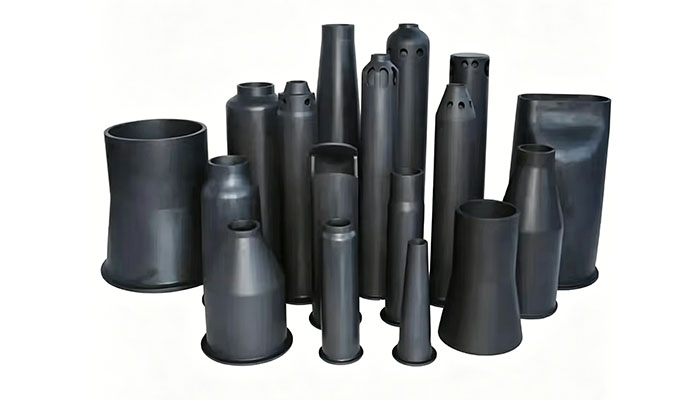
When Silicon Nitride Becomes a Better Choice
Silicon nitride is widely considered for demanding ceramic applications where thermal shock resistance, mechanical strength, wear resistance, and dimensional stability are important.
A Si₃N₄ Product can be useful for components that experience repeated temperature changes or mechanical loading.
Typical considerations include:
Thermal shock
Mechanical stress
Abrasion
Dimensional stability
Long operating cycles
However, silicon nitride should not automatically replace every conventional ceramic component. The material needs to match the actual application.
For example, if the main failure mechanism is severe thermal cycling, silicon nitride may deserve consideration. If the dominant problem is abrasive wear combined with high heat transfer requirements, another ceramic material may be more appropriate.
When SiC Products Are More Suitable
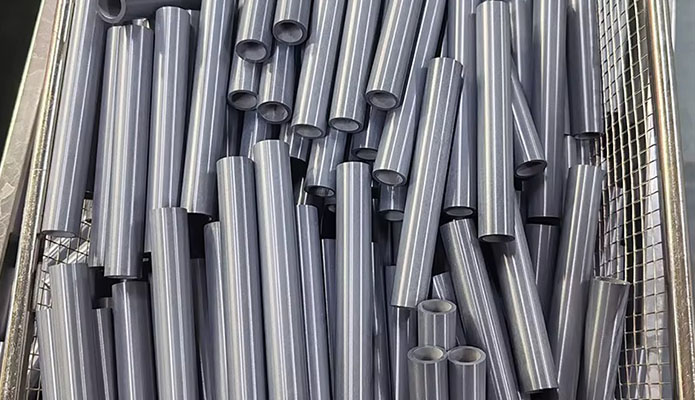
SiC Product solutions are often considered for applications involving high temperature, abrasion, and demanding heat-transfer conditions.
Silicon carbide has high hardness and high thermal conductivity, which can make it useful in components exposed to severe wear or significant temperature gradients.
In one industrial application, the maintenance team initially focused on increasing component thickness after observing rapid surface wear. Further inspection showed that the problem was caused by continuous abrasive contact rather than insufficient thickness.
Changing the material to a more wear-resistant ceramic solution was therefore more meaningful than simply making the original component thicker.
This type of failure analysis can prevent unnecessary material upgrades.
Si₃N₄ and SiC Should Not Be Selected by Temperature Alone
Both materials can perform well in high-temperature environments, but their advantages are not identical.
| Factor | Si₃N₄ | SiC |
|---|---|---|
| Thermal shock resistance | Excellent | Excellent |
| Wear resistance | Excellent | Excellent |
| Thermal conductivity | Moderate to high | High |
| Mechanical strength | High | High |
| Typical consideration | Thermal cycling and mechanical stress | Heat transfer and severe wear |
Actual performance depends on material grade, manufacturing method, component design, and operating conditions.
What Should Be Checked Before Selection?
Before purchasing a Si₃N₄ Product or SiC Product, engineers should understand the actual working environment.
Important information includes:
Operating temperature
Heating and cooling frequency
Mechanical loading
Abrasive conditions
Furnace atmosphere
Component dimensions
Installation method
Previous failure history
The failure history is particularly useful.
If the same component has failed several times at the same location, the crack or wear pattern may reveal more than a standard product specification.
A Practical Lesson from Maintenance
One common mistake is replacing a failed component immediately without examining the damaged one.
A better practice is to record where the failure started, what the surface looked like, how long the component operated, and whether the operating conditions had changed.
Cracking may indicate thermal stress. Surface loss may indicate abrasion. Deformation may point to temperature combined with mechanical loading.
Once the failure mechanism is identified, material selection becomes much more straightforward.
High-temperature ceramic components need to withstand more than heat. Thermal cycling, mechanical stress, abrasion, and operating atmosphere can all determine service life.
Silicon nitride can be considered when thermal shock and mechanical reliability are important, while SiC Product solutions can be valuable in applications involving high temperature, wear, and heat transfer.
The most reliable approach is not to select the material with the highest specification. It is to identify the actual failure mechanism and choose the material accordingly.
For industrial applications, a properly selected Si₃N₄ Product or SiC Product can help reduce repeated component replacement, maintenance interruptions, and unexpected equipment downtime.
Online Message
RELATED PRODUCTS

LAR’s silicon carbide threaded tube is a high-performance ceramic component widely used in high-temperature industrial applications. This silicon carbide threaded tube protects equipment from wear, corrosion, and thermal stress. Many industries rely on silicon carbide threaded tube products to maintain operational stability and extend service life. Manufacturers produce silicon carbide threaded tube using advanced sintering technology. The process creates a dense and durable ceramic structure. A professional silicon carbide threaded tube factory ensures precise dimensions and consistent quality during production. LAR’s spiral shaped silicon carbide rod and sgr type silicon carbide rod are related products often used together with silicon carbide threaded tube in industrial systems. Spiral shaped silicon carbide rod improves heat transfer and flow uniformity, while sgr type silicon carbide rod offers excellent mechanical and thermal performance. Both types complement the protective functions of silicon carbide threaded tube in harsh environments. LAR’s silicon carbide threaded tube products perform reliably in molten metal, furnace gas, and corrosive atmospheres. Many users select a trusted silicon carbide threaded tube factory to ensure long-term stability and accurate performance.
LAR's silicon nitride burner tubes are advanced ceramic components used in high-temperature combustion systems. These silicon nitride burner tubes guide flame flow and protect heating elements inside industrial furnaces. Many industries use silicon nitride tube products to improve combustion efficiency and equipment reliability. Manufacturers produce silicon nitride burner tubes through high-temperature sintering processes. The process forms a dense and strong ceramic structure. Each silicon nitride tube maintains stability under thermal and mechanical stress. Silicon nitride heater tube products share similar material properties and are widely used in heating systems. LAR's silicon nitride burner tubes provide excellent resistance to oxidation and corrosion. These silicon nitride tube components perform well in oxidizing and reducing atmospheres. Many users select silicon nitride heater tube solutions because the material reduces deformation and extends service life. Industries such as ceramics, metallurgy, and heat treatment widely use silicon nitride burner tubes. These silicon nitride tube components ensure stable heat distribution and improve thermal efficiency.
LAR’s Silicon carbide kiln shelves are high-performance refractory plates used in demanding kiln environments. These shelves are an important part of silicon carbide kiln furniture systems. Manufacturers produce silicon carbide kiln shelves using SiC-based materials through high-temperature sintering or reaction bonding processes. The material provides excellent thermal conductivity and high mechanical strength. These properties make the product suitable for fast firing and heavy load applications. Many industries choose sic kiln furniture when they require stable performance under extreme conditions. Silicon carbide kiln furniture improves heat transfer and supports efficient kiln operation.
LAR’s Silicon Carbide Kiln Posts are high-performance refractory supports used in kiln stacking systems. These posts create stable spacing between shelves and maintain structural integrity during firing. Manufacturers produce Silicon Carbide Kiln Posts using SiC-based materials through sintering or reaction bonding processes. The material provides high strength and excellent thermal conductivity. These properties make the posts suitable for demanding kiln conditions. Many suppliers offer Silicon Carbide Kiln Posts for sale in standard sizes. Users can also select custom Silicon Carbide Kiln Posts to match specific kiln layouts. These posts improve heat distribution and support efficient firing cycles.
LAR's silicon carbide plates are high-performance refractory and structural components used in high-temperature and wear-resistant applications. These plates provide excellent mechanical strength and thermal stability. Manufacturers produce silicon carbide ceramic plate products using advanced processes such as reaction bonding or sintering. The material offers high hardness, good thermal conductivity, and strong resistance to oxidation. Each silicon carbide plate maintains stable performance under harsh working conditions. LAR's silicon carbide plates are widely used in kiln systems, industrial furnaces, and mechanical equipment. Many users evaluate silicon carbide plate price based on material grade, size, and production method.
LAR's silicon nitride thermocouple protection tube is a high-performance ceramic component used for temperature measurement in harsh environments. This silicon nitride thermocouple protection tube protects thermocouples from corrosion, oxidation, and mechanical damage. Many industries rely on silicon nitride thermocouple protection tube products to ensure accurate and stable temperature monitoring. Manufacturers produce silicon nitride thermocouple protection tube products using advanced sintering technology. The material forms a dense and strong ceramic structure. A professional silicon nitride thermocouple protection tube factory controls the process to ensure consistent quality and precise dimensions. LAR's Nitride bonded silicon carbide thermocouple protection tube is another common option in high-temperature applications. This nitride bonded silicon carbide thermocouple protection tube combines silicon carbide grains with a silicon nitride bonding phase. Both silicon nitride thermocouple protection tube and nitride bonded silicon carbide thermocouple protection tube offer excellent resistance to thermal shock and chemical attack. LAR's silicon nitride thermocouple protection tube products perform well in molten metal, furnace gas, and corrosive atmospheres. Many users choose a reliable silicon nitride thermocouple protection tube factory to ensure long service life and stable performance.
LAR's silicon nitride nozzles are advanced ceramic components used in high-temperature and high-wear environments. These silicon nitride nozzles control fluid flow, gas injection, or material discharge in industrial systems. Many industries rely on silicon nitride ceramic nozzles to achieve stable performance and long service life. Manufacturers produce silicon nitride nozzles using precision forming and high-temperature sintering processes. The process creates a dense and uniform microstructure. Each silicon nitride ceramic nozzles product maintains strength under thermal and mechanical stress. Silicon nitride nozzle liners use the same material system and provide internal protection for metal assemblies. LAR's silicon nitride nozzles offer excellent resistance to oxidation, corrosion, and abrasion. These silicon nitride ceramic nozzles perform well in harsh environments such as molten metal and high-velocity gas flow. Many users choose silicon nitride nozzle liners to extend equipment lifespan and reduce maintenance costs. Industries such as metallurgy, petrochemical processing, and ceramics widely use silicon nitride nozzles. These silicon nitride ceramic nozzles improve process stability and efficiency.
LAR's silicon nitride igniter rod is a high-performance heating component used for ignition in industrial and domestic burner systems. This silicon nitride igniter rod converts electrical energy into heat and enables rapid ignition. Many systems rely on silicon nitride igniter rod products to achieve stable and efficient startup. Manufacturers produce silicon nitride igniter rod components using advanced ceramic processing and metallization technology. The structure combines a dense ceramic body with an internal heating element. A si3N4 ceramic ignitor rod provides excellent thermal efficiency and reliable ignition performance. LAR's Nitride bonded silicon carbide is another material used in high-temperature environments. Nitride bonded silicon carbide offers good thermal shock resistance and mechanical strength. However, silicon nitride igniter rod products provide faster heating response and better oxidation resistance compared with nitride bonded silicon carbide components. LAR's silicon nitride igniter rod products operate in gas burners, oil burners, and pellet stoves. Many users select si3N4 ceramic ignitor rod solutions to improve ignition reliability and reduce energy consumption.
