
 English
 Русский
 Español
 Français
 Deutsch
 简体中文
 Árabe
 Português
 日本語
 한국어
 हिंदी
 Prancis
 Türkçe
 Tiếng Việt
 Italiano
 ไทย

Wear Resistant Ceramic for Industrial Equipment Protection
Industrial equipment often handles abrasive materials such as sand, coal, ash, cement, and minerals. These materials can wear down steel surfaces over time. Worn parts may cause leaks, equipment damage, and unplanned maintenance.
Wear resistant ceramic provides a practical way to protect equipment from abrasion. It is used in pipes, chutes, hoppers, and material handling equipment. The right ceramic material can help reduce wear and extend the service life of key parts.
1. Why Industrial Equipment Needs Wear Resistant Ceramic
Abrasive materials can cause serious wear in areas where they slide, fall, or flow at high speed. Steel surfaces may become thinner with continued use. Some parts may need frequent repair or replacement.
Wear resistant ceramic helps protect these high-wear areas. Many ceramic materials have high hardness and good wear resistance. They can reduce direct contact between abrasive materials and the equipment surface.
Common applications include:
Pipes and elbows: Protect inner surfaces that carry sand, ash, slurry, or mineral particles.
Chutes and hoppers: Reduce wear where materials slide or fall.
Mining equipment: Protect parts that handle hard ores and mineral materials.
Cement plants: Reduce wear in equipment that moves raw materials, clinker, and other abrasive products.
Power plants: Protect selected areas that handle coal and ash.
The best solution depends on material size, flow speed, impact force, temperature, and installation conditions.
2. Common Types of Wear Resistant Ceramic and Their Applications
Different ceramic materials have different properties. Buyers should match the material to the working conditions instead of choosing by hardness alone.
Ceramic type | Main properties | Common applications |
Alumina ceramic | High hardness and good abrasion resistance | Chutes, hoppers, pipes, and material handling equipment |
Silicon carbide ceramic | High hardness, good thermal conductivity, and strong wear resistance | High-wear parts exposed to heat or demanding service conditions |
Zirconia ceramic | High strength and good fracture resistance for suitable grades | Precision parts and applications that need toughness as well as wear resistance |
Actual performance depends on the material grade, manufacturing method, part design, and operating conditions. No single ceramic type is best for every application.
Alumina ceramic is widely used for general wear protection. Silicon carbide may suit applications that need both wear resistance and good heat transfer. Zirconia can be useful when strength and fracture resistance are important.
3. How Wear Resistant Ceramic Helps Reduce Equipment Wear
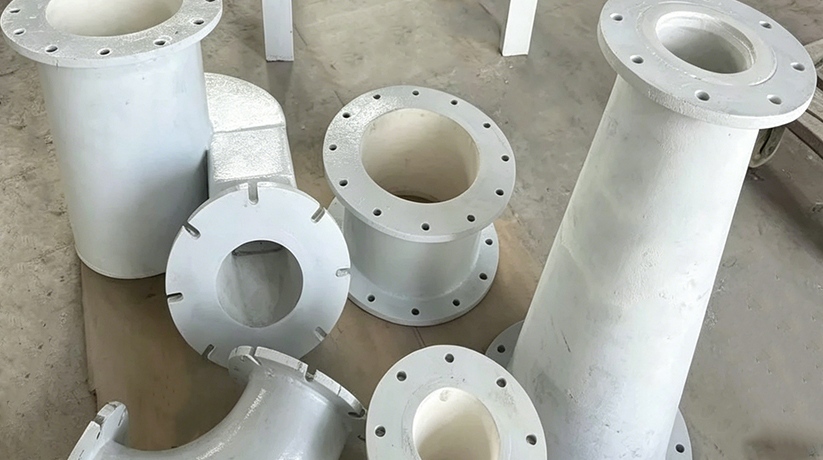
Ceramic lining creates a protective layer between abrasive materials and the equipment body. This layer takes much of the wear that would otherwise affect the steel surface.
However, ceramic hardness alone does not guarantee long service life. Large particles, heavy impact, poor support, and incorrect installation can cause cracking or loose tiles.
The design should match the wear pattern. Sliding abrasion may require a different lining arrangement from direct impact. Pipe bends may also need special attention because material flow can cause uneven wear.
Correct installation is equally important. The lining method, adhesive or fixing method, joint design, and surface preparation should suit the equipment and operating temperature. These details help the ceramic lining stay in place during use.
4. What to Expect from a Wear Resistant Ceramic Manufacturer
A reliable wear resistant ceramic manufacturer should understand the actual working conditions, not just the requested product name.
Before production, the manufacturer should confirm several details:
The type and size of the abrasive material
Operating temperature and possible chemical exposure
Expected impact and flow conditions
Required dimensions and thickness
Installation method and available space
These details help the manufacturer suggest a suitable material and product shape. Buyers should also check dimensional accuracy, surface quality, material specifications, and inspection procedures.
For replacement projects, drawings and photos of worn parts can help clarify the required shape and dimensions. If available, records of previous failures can also help identify possible design or installation problems.
5. Key Production Factors at a Wear Resistant Ceramic Factory
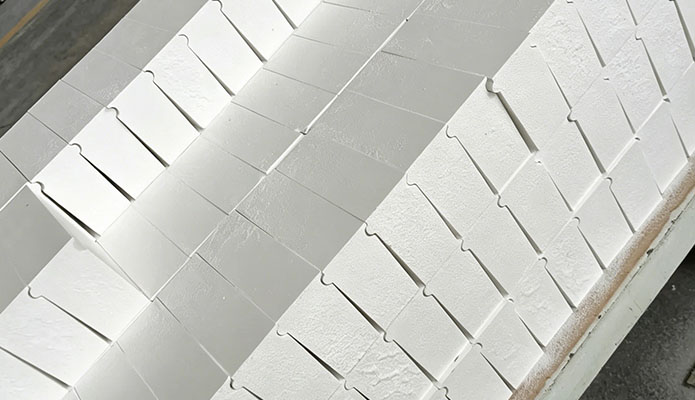
A wear resistant ceramic factory must control each production stage to achieve consistent quality. The process may include raw material preparation, forming, drying, firing or sintering, machining, and final inspection. The exact process depends on the ceramic type and product design.
Several factors deserve attention.
Raw material quality: Material composition affects the properties of the finished ceramic. Clear material specifications help buyers compare products.
Forming and dimensions: Pipes, tiles, plates, and custom shapes need accurate dimensions. Poor fit can create gaps or make installation difficult.
Firing and sintering: These processes affect the final structure and performance. Process control helps reduce defects and improve consistency.
Final inspection: Dimensions, visible defects, and other agreed specifications should be checked before shipment.
When comparing suppliers, ask about their production process, quality checks, and ability to make products to drawing. Do not judge a factory by price alone.
6. Custom Wear Resistant Ceramic for Different Industrial Needs
Standard ceramic tiles and plates may suit simple surfaces. Complex equipment often needs custom shapes, sizes, or lining layouts.
Custom wear resistant ceramic can include ceramic-lined pipes, elbow liners, wear plates, tiles, and parts made to fit specific equipment. The design should consider both wear protection and installation access.
For example, a transfer chute may suffer heavy wear at the point where material changes direction. A ceramic lining can protect this area, but the thickness, shape, and fixing method must suit the impact and flow conditions.
Before ordering custom products, provide equipment drawings, dimensions, operating details, and photos where possible. This information helps the manufacturer assess the design and reduce fitting problems during installation.
The right wear resistant ceramic solution combines suitable material, accurate dimensions, controlled production, and proper installation. Working with a capable manufacturer and factory helps buyers match the product to actual operating conditions and reduce avoidable maintenance.
Online Message
RELATED PRODUCTS

LAR’s Wear-resistant ceramic pipes/tubes are high-performance conveying components designed for severe abrasion, corrosion, and high-flow industrial environments. These wear-resistant ceramic pipes/tubes are widely used in mining, power, steel, and chemical industries. Many systems rely on wear-resistant ceramic pipes/tubes to extend pipeline life and reduce maintenance downtime. LAR’s Wear resistant ceramic tube products are designed for straight or curved pipeline sections that handle abrasive media. This wear resistant ceramic tube provides a smooth internal surface that reduces friction and material loss during transport. Wear resistant ceramic pipe is commonly used in pneumatic and hydraulic conveying systems where particle erosion is severe. LAR’s Ceramic tile lined pipe is another common structure used for complex pipeline conditions. This ceramic tile lined pipe uses high-hardness ceramic tiles bonded to a steel pipe body to create strong wear protection. Manufacturers design ceramic tile lined pipe systems to improve durability in high-impact and high-velocity flow environments.
LAR’s wear-resistant ceramic rubber is a composite lining material designed to combine the elasticity of rubber with the hardness of ceramic. This wear-resistant ceramic rubber is widely used in mining, power, cement, and bulk material handling systems. Many industries use wear-resistant ceramic rubber to improve impact resistance and wear protection at the same time. LAR’s square ceramic rubber lagging is commonly applied on pulley surfaces. This square ceramic rubber lagging provides strong friction resistance and reduces belt slippage in conveyor systems. Ceramic rubber plate products are used in flat or curved surfaces that require both cushioning and abrasion resistance. LAR’s wear resistant ceramic rubber pad is designed for localized protection in high-impact zones. This wear resistant ceramic rubber pad absorbs vibration while the ceramic surface resists abrasion. Wear resistant ceramic rubber panel is used for large-area lining protection in chutes, hoppers, and transfer points.
Silicon carbide wear resistant ceramics are advanced materials designed for extreme abrasion and high-temperature environments. These products are mainly made from silicon carbide (SiC). The silicon carbide wear plates provide excellent resistance to wear, corrosion, and thermal shock. LAR Silicon Carbide Wear Resistant Ceramic delivers strong protection in high-abrasion industrial systems. This product uses high-purity silicon carbide materials and advanced sintering technology. The structure gives the ceramic high hardness, low wear loss, and stable chemical performance. Many mining plants, power stations, cement factories, and bulk material handling systems use silicon carbide wear resistant ceramics to reduce equipment damage and extend service life. LAR designs these products for harsh operating environments with strong friction and particle impact. The material keeps stable performance under continuous wear conditions. Many customers choose silicon carbide wear plates because they provide better wear resistance than ordinary metal liners. The dense ceramic structure also helps reduce maintenance frequency and shutdown costs. LAR produces different shapes and customized sizes for various industrial equipment. Engineers can install sic ceramic linings inside chutes, cyclones, hoppers, pipelines, separators, and transfer systems. These ceramic parts protect equipment surfaces from rapid wear caused by sand, ore, ash, coal powder, and other abrasive materials.
LAR manufactures wear resistant ceramic plates for heavy abrasion industrial environments. A wear resistant ceramic plate from LAR uses high-purity ceramic materials to ensure strong mechanical stability. This wear resistant plate protects equipment surfaces from continuous friction, impact, and particle erosion. LAR produces each wear resistant ceramic plate through pressing and high-temperature sintering processes. This wear resistant plate forms a dense microstructure that improves surface strength and durability. A custom wear resistant plate supports precise adaptation to different equipment layouts and installation conditions. Many industries such as mining, cement, steel, and power generation rely on wear resistant ceramic plates. A wear resistant ceramic plate is commonly installed in chutes, hoppers, cyclones, and conveying systems. A custom wear resistant plate from LAR helps extend equipment lifespan and reduce maintenance frequency in harsh working environments.
LAR produces ceramic wear resistant linings using high-purity alumina ceramics. The material forms a dense and hard structure after sintering. This structure gives the product strong resistance to abrasion and erosion. LAR designs ceramic wear linings for demanding industries such as mining, cement, steel, and power generation. These industries require reliable protection for equipment exposed to bulk materials. The product protects chutes, hoppers, cyclones, and pipelines from continuous wear. LAR supplies a wide range of ceramic wear liners in standard tiles, engineered shapes, and composite panels. The product can adapt to flat, curved, and complex surfaces. LAR also integrates rubber or steel backing into ceramic wear resistant linings to improve impact absorption. This combination enhances durability under mixed wear conditions. The product supports several installation methods, including adhesive bonding and mechanical fixing. LAR ensures that ceramic wear linings reduce maintenance frequency and extend equipment service life.
LAR produces wear resistant ceramic brick with high-purity alumina as the main material. The manufacturing process forms a dense and fine-grained structure. This structure gives the product excellent resistance to abrasion and erosion. LAR designs wear resistant ceramic block systems for industries such as mining, cement, steel, and bulk material handling. These applications involve constant impact and sliding wear. The product protects equipment like chutes, bins, pipes, and mills from rapid damage. LAR also offers wear resistant ceramic cube solutions for modular lining systems. These cubes improve flexibility in installation and help distribute wear more evenly. LAR provides customized sizes and thicknesses of wear resistant ceramic brick to match different equipment shapes. The product can fit both flat and curved surfaces. LAR ensures that wear resistant ceramic block solutions reduce maintenance frequency and extend service life. The product also supports efficient operation by maintaining stable performance under continuous use.
Alumina wear resistant ceramic is a high-performance material designed for severe abrasion and impact conditions. This alumina wear resistant ceramic uses high-purity aluminum oxide to achieve excellent hardness and wear resistance. Many industries select alumina wear resistant ceramic to protect equipment and extend service life. Alumina Wear Plates are one of the most common forms of this material. These Alumina Wear Plates provide a flat and durable surface for areas exposed to continuous material flow. Alumina Lining systems use this material to protect chutes, hoppers, and pipelines from wear damage. Wear Resistant Alumina Ceramic Parts are produced in various shapes to match complex equipment structures. Manufacturers design Wear Resistant Alumina Ceramic Parts to ensure precise fitting and reliable performance. The dense microstructure of alumina wear resistant ceramic reduces material loss and improves operational efficiency. Manufacturers produce Alumina Wear Plates and Alumina Lining components through pressing and high-temperature sintering processes. These processes ensure high density, uniform structure, and consistent quality. Wear Resistant Alumina Ceramic Parts perform well in demanding environments where traditional materials fail quickly.
LAR’s wear-resistant hex mats are modular ceramic lining systems designed for severe abrasion environments. These wear-resistant hex mats are widely used to protect pipelines, chutes, cyclones, and industrial equipment. Many industries select wear-resistant hex mats to improve wear protection efficiency and reduce maintenance frequency. LAR’s wear-resistant alumina ceramic hex mat is one of the most commonly used structures in high-abrasion systems. This wear-resistant alumina ceramic hex mat provides a dense and uniform protective layer with excellent hardness and stability. Wear resistant ceramic mosaic mat is designed with small hexagonal tiles that are pre-mounted on flexible backing materials for easy installation. LAR’s wear resistant ceramic hex mat is also used in complex curved or irregular surfaces where traditional tiles are difficult to install. Manufacturers design wear resistant ceramic hex mat systems to ensure strong adhesion, high coverage efficiency, and long service life.This production method ensures consistent tile alignment and stable bonding strength. Wear-resistant alumina ceramic hex mat and wear resistant ceramic mosaic mat are widely used in heavy-duty industrial applications.
